
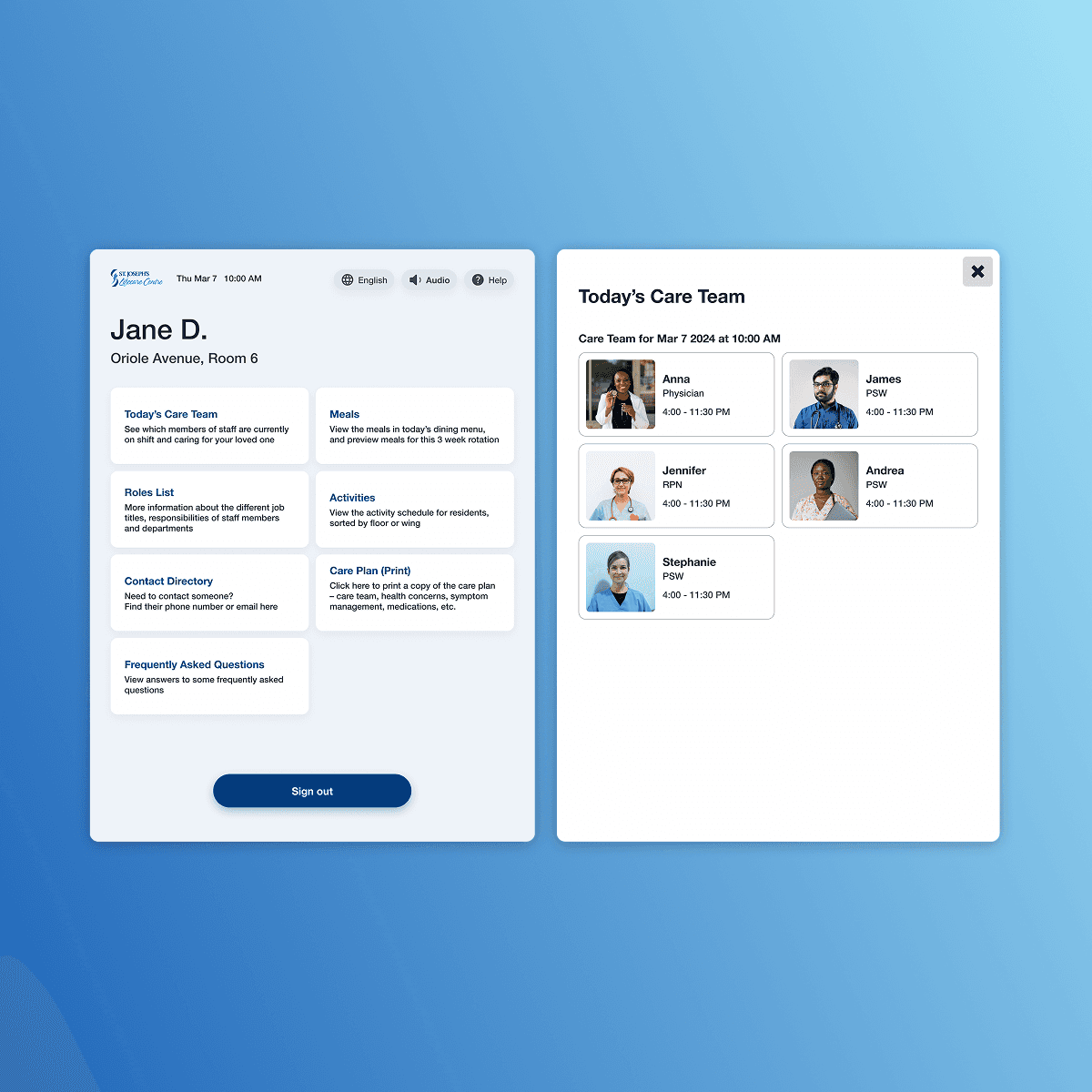
The Caregiver Kiosk:
An interactive kiosk system with on-demand access to information about your loved ones in long-term care
Background
St. Joseph’s Lifecare Centre, a long-term care (LTC) community

St. Joseph's Lifecare Centre
Not for profit LTC home in Brantford
Provide care and residential facilities for those whose needs cannot be met within the community
Typically for reasons such as old-age, disabilities, and other health conditions

Caregivers
Visitors designated by residents of LTC
Support residents through cognitive, emotional , and physical support
Important for improving quality of life of residents
How Might We…
Help caregivers monitor well-being of loved ones?
Adress Caregiver concerns?
Mitigate caregivers’ worries about needs (of loved ones) being met?

Competitive Analysis
A competitive analysis highlighted that our solution needed to innovate beyond best practices
Comparing against 4 other LTC homes in the region, St, Joseph’s shared many best practices:
Family Events
Family Spaces
Newsletters / Bulletin Boards
Family Council
Educational Packages
Support Groups
Exploring other kinds of facilities/organizations gave rise to new ideas for innovation:
Technology integration within LTC
Mobile platforms for connection and communication
Focusing on caregiver physical and mental wellness
Easing transportation burdens for caregivers
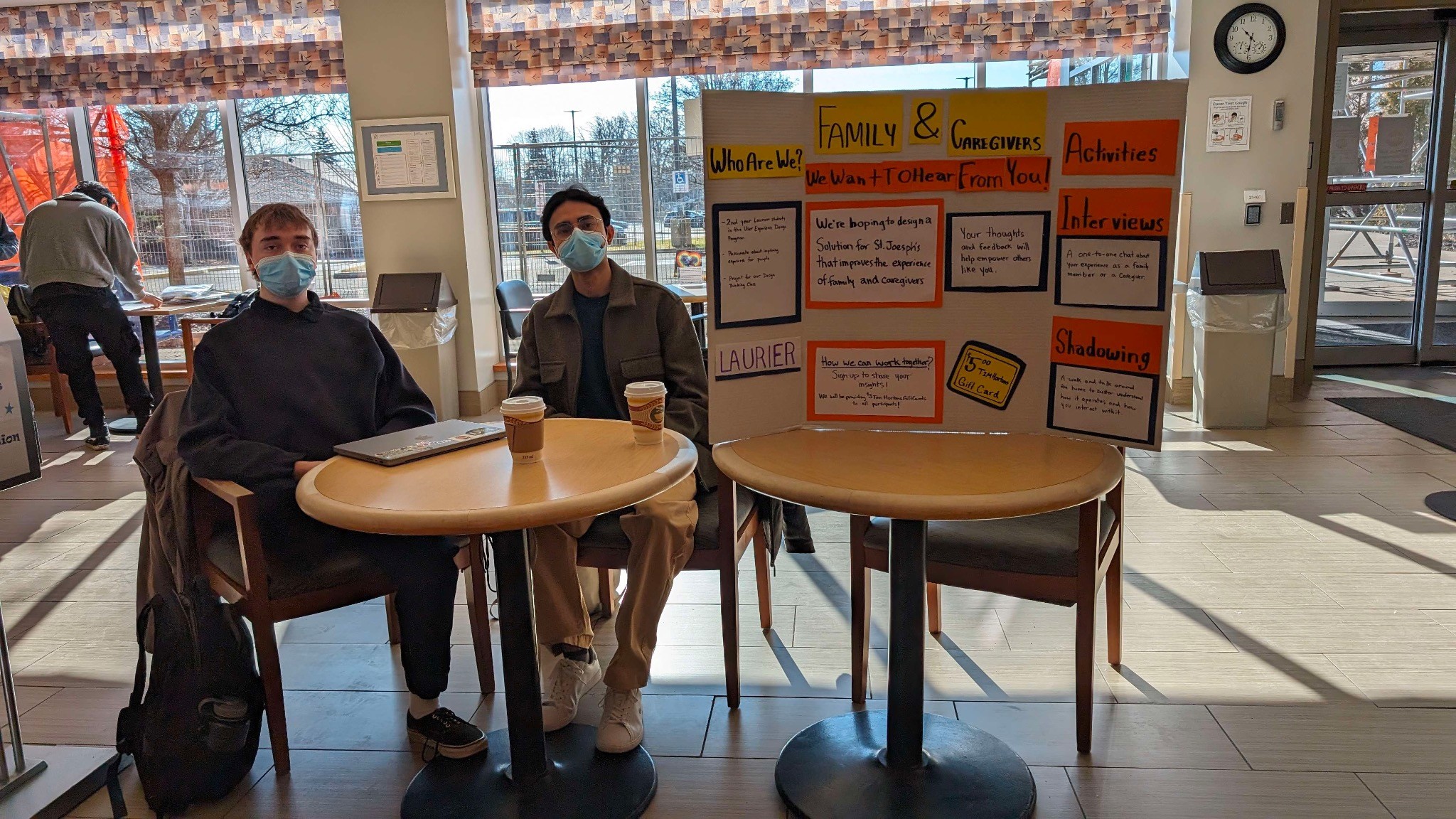
Problem Area #1
Communication
Not being heard or getting hold of important contacts
Being continuously passed from one staff member to another
Concerns and questions not being addressed
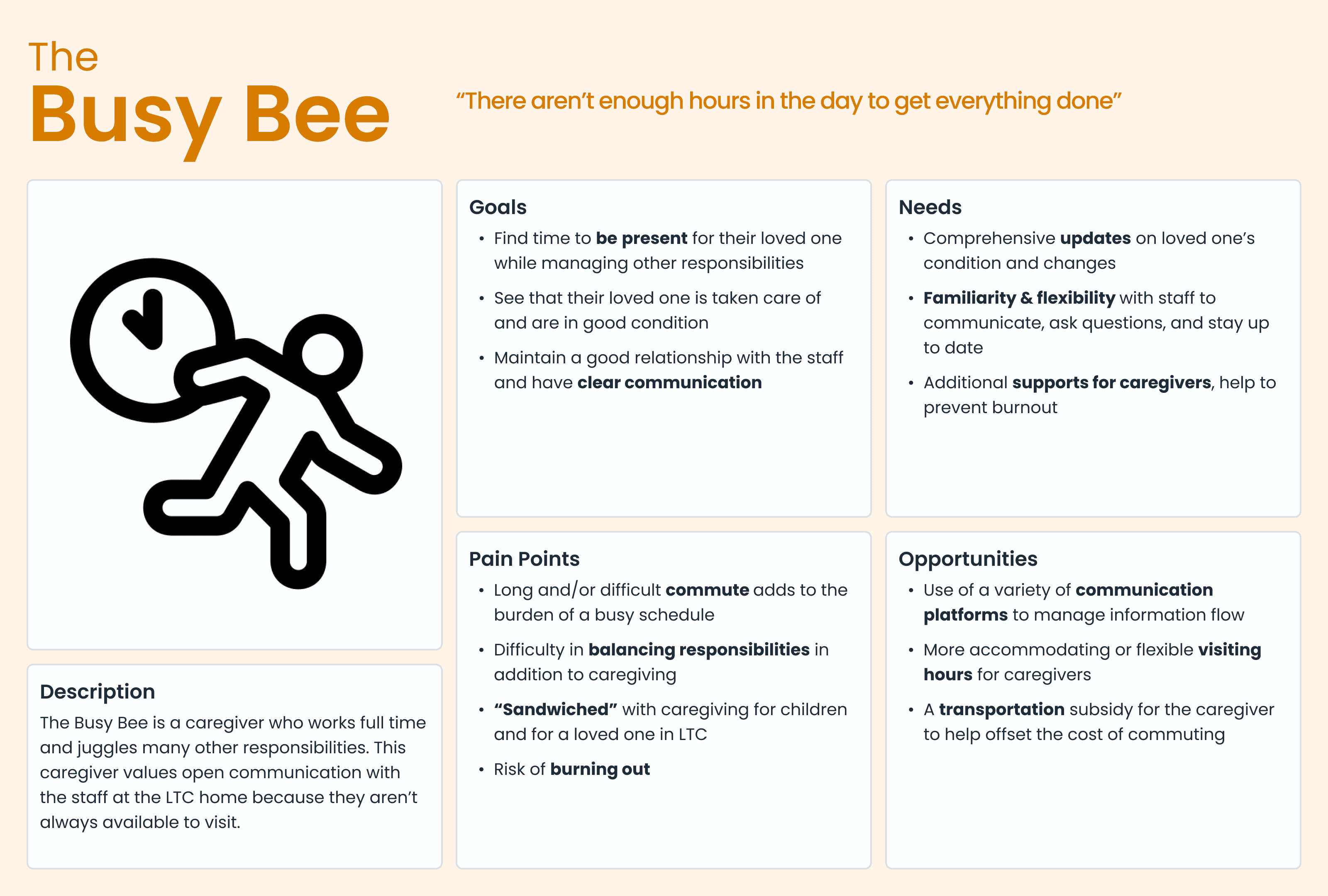
Problem Area #2
Staff Concerns
Concerns/worries about short-staffing in the LTC home
Frequent staff changes/rotations impacting caregiver-staff relationship
Difficult determining who to direct questions to
Problem Area #3
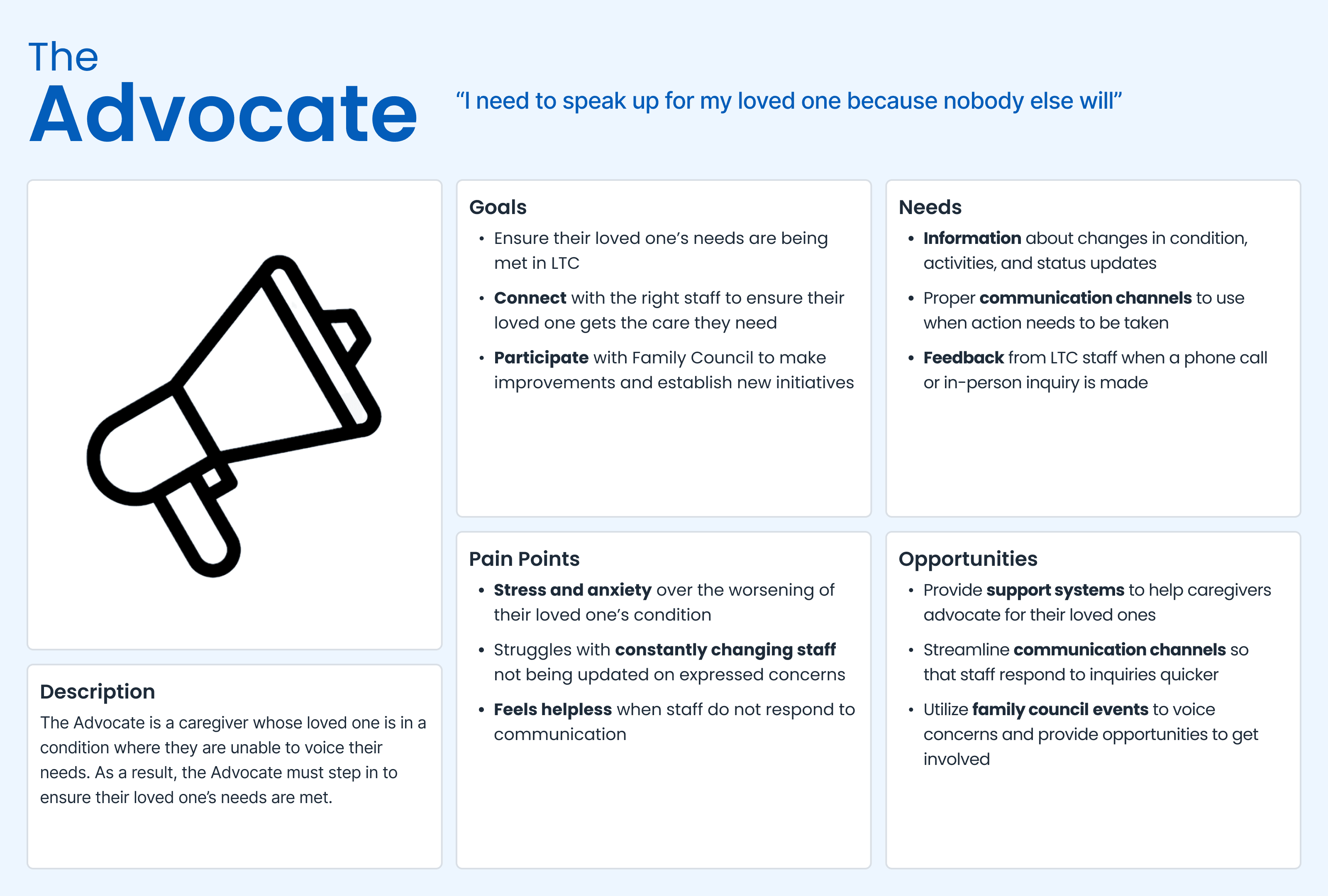
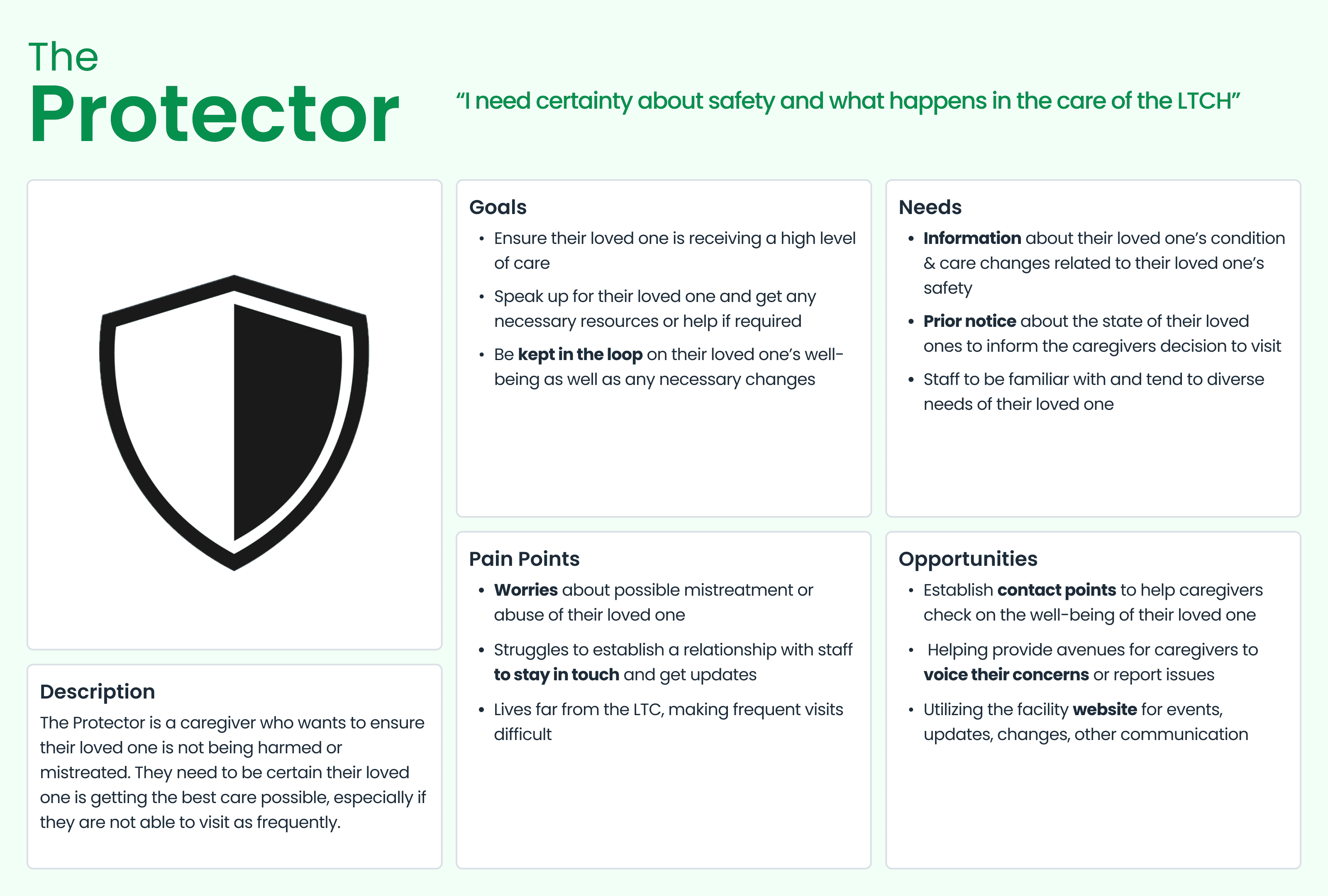
Feelings & Emotions
Emotional difficulty in relinquishing care
Struggles in being an “expert” in the world of LTC
Worries about ensuring proper care when they’re not around
Mapping Insights to Features
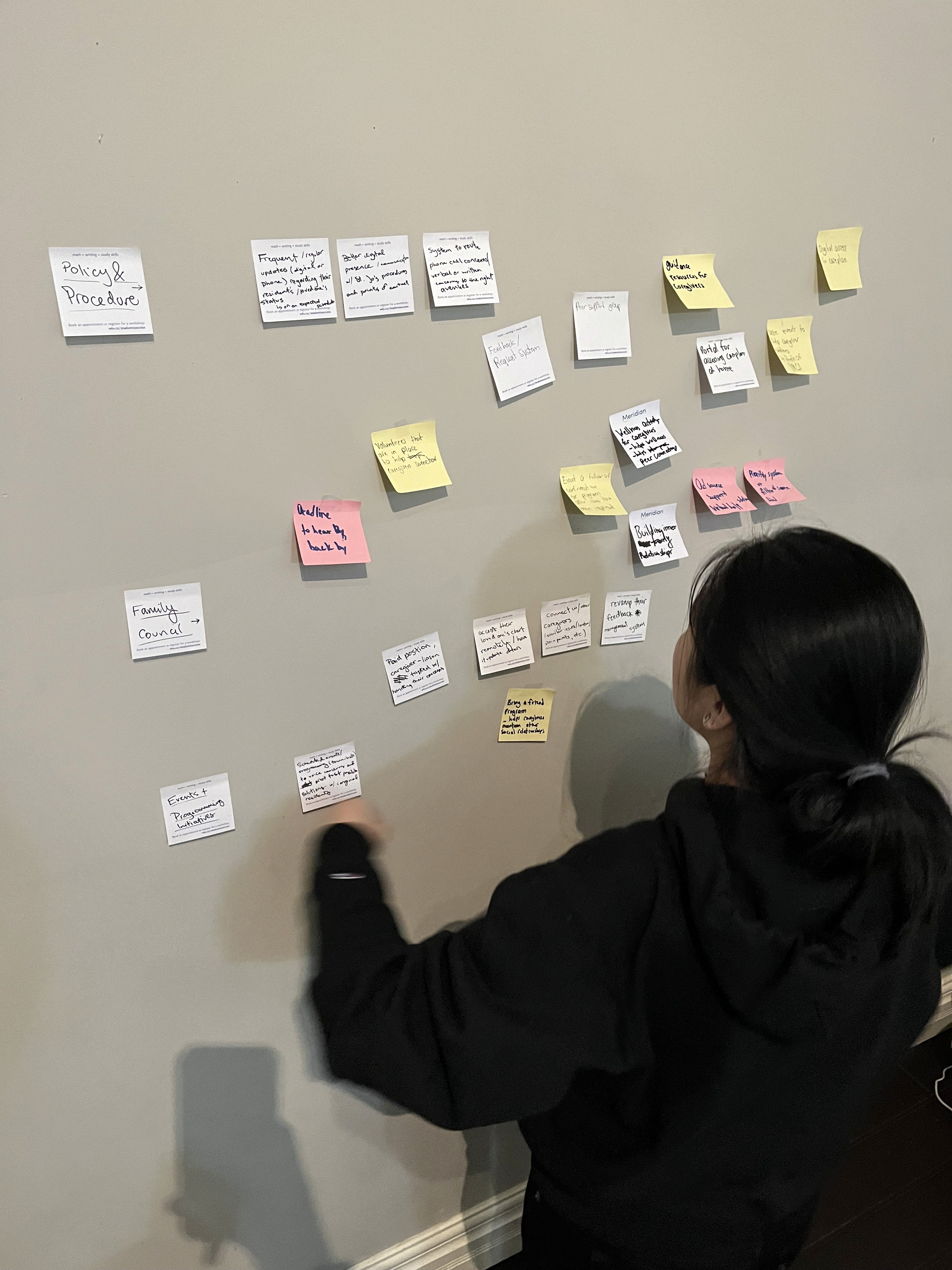
Understanding the key problem areas enabled us to identify information needs
Based on insights, we devised a list of content for the kiosk targeted at resolving the problem areas.
Daily Staff List
Build caregiver-staff relationship by enabling caregivers to stay updated on who is assisting their loved one
Access to Care Plan
Keep caregivers informed about their loved one’s care
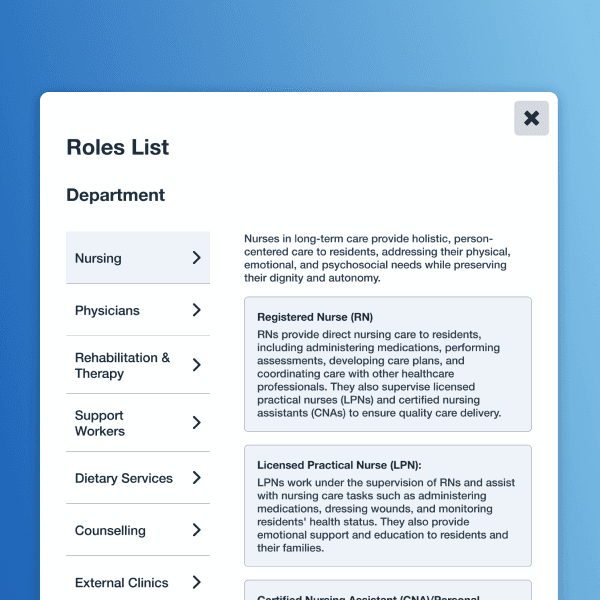
Roles List, FAQ
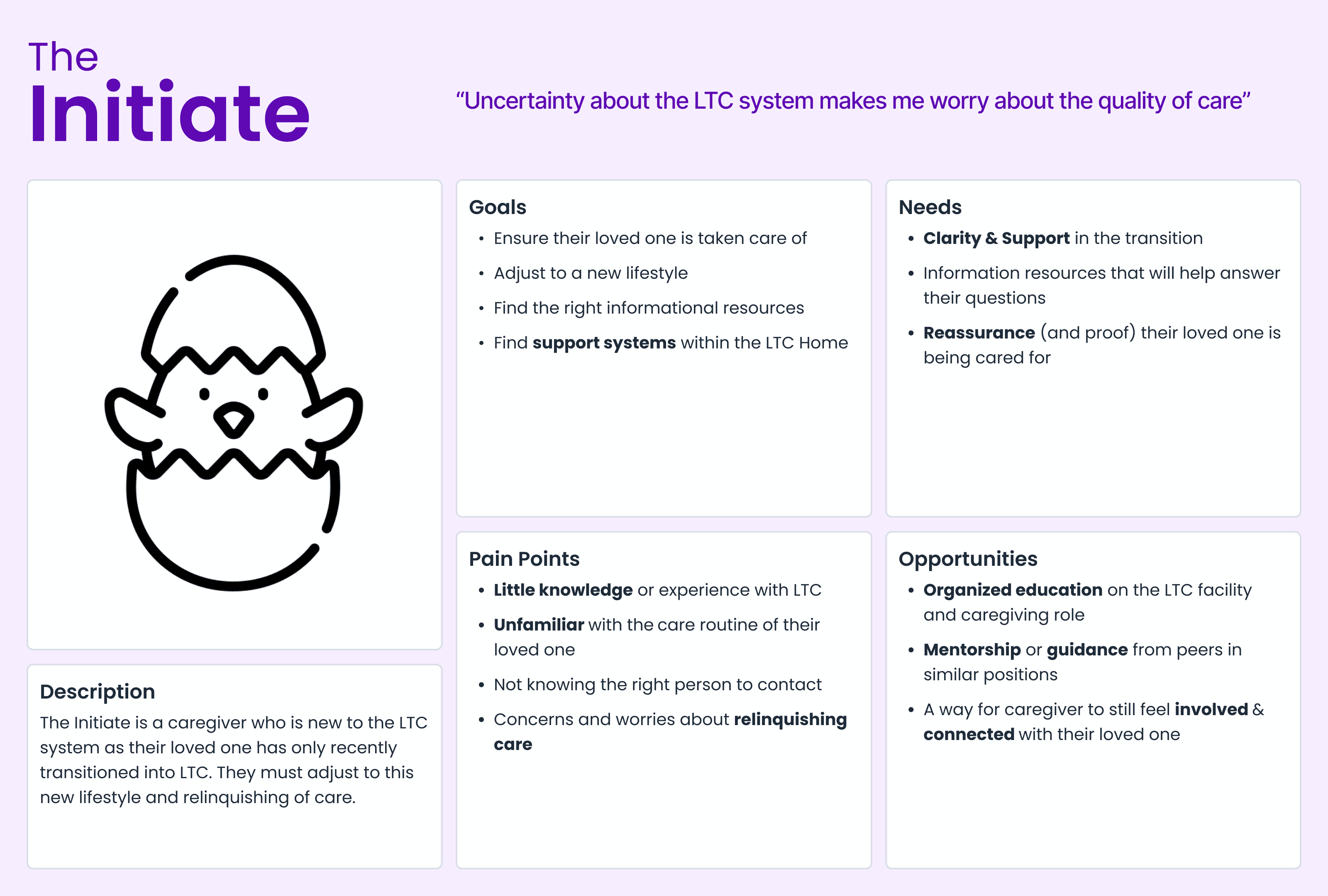
Help orient new caregivers to the world of LTC
Contact Directory
Empower caregivers to know exactly who they need to get in touch with, preventing them from being passed from one staff member to another
Activity Schedule
Keep caregivers informed about what their loved ones are up to within the home
Key Findings
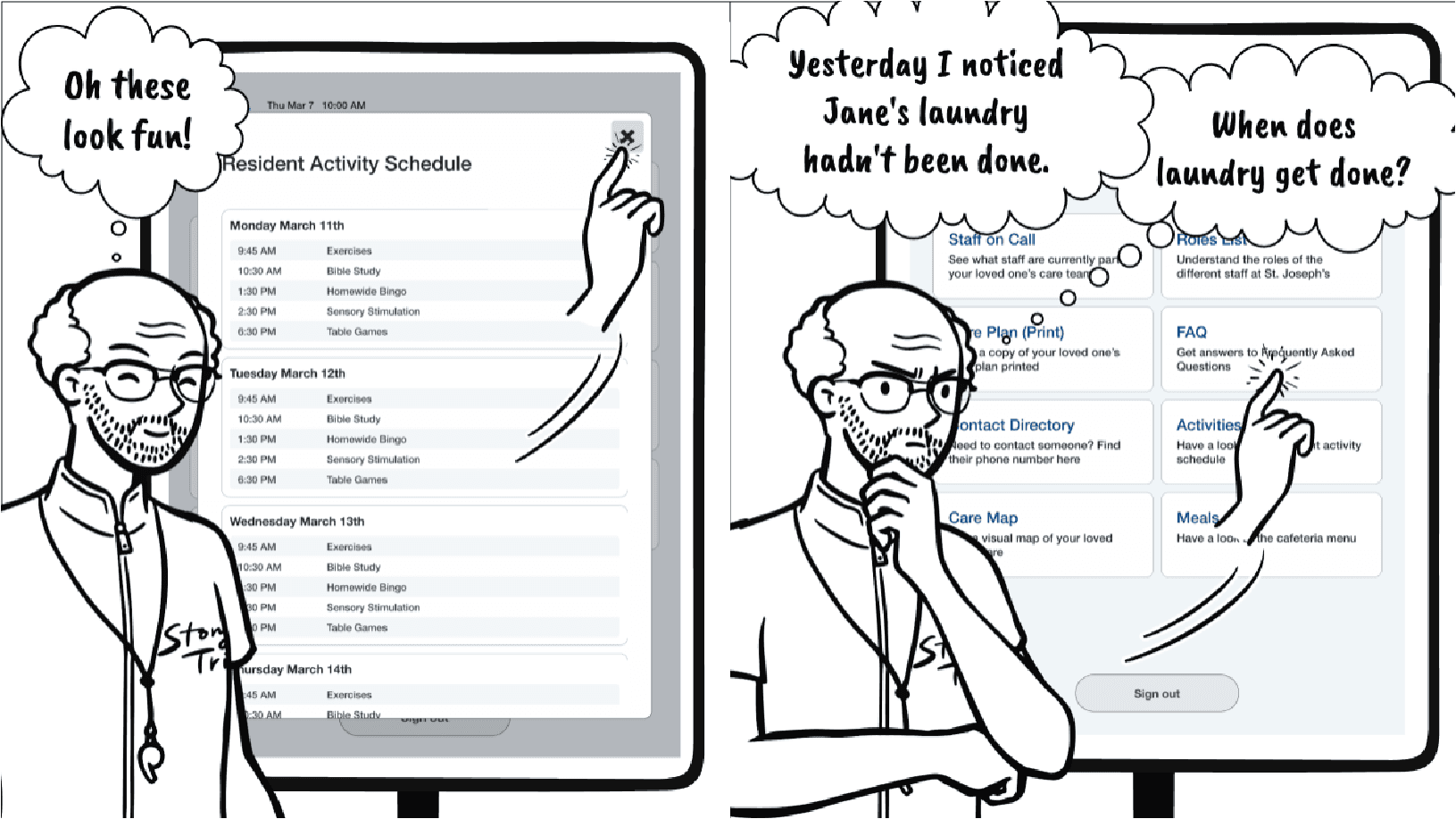
Users enjoyed having access to key information like Daily Staff List, FAQ, and Contact Directory
Improvement areas included: including outbreak notices, meal serving times, and reception/calling hours
Participants wanted a digital Covid-19 symptom screener to replace the physical sign in sheet that often caused bottleneck problems when visiting
Usability Testing
Our prototype uncovered issues with colour psychology, information architecture, and accessibility
We conducted usability testing with caregivers (n=6) to test the functionality of our interface, validate the content, and probe further suggestions.
Key Findings
Participants liked the informative content, the simplistic interface, and that the digital Covid-19 symptom screener as more efficient
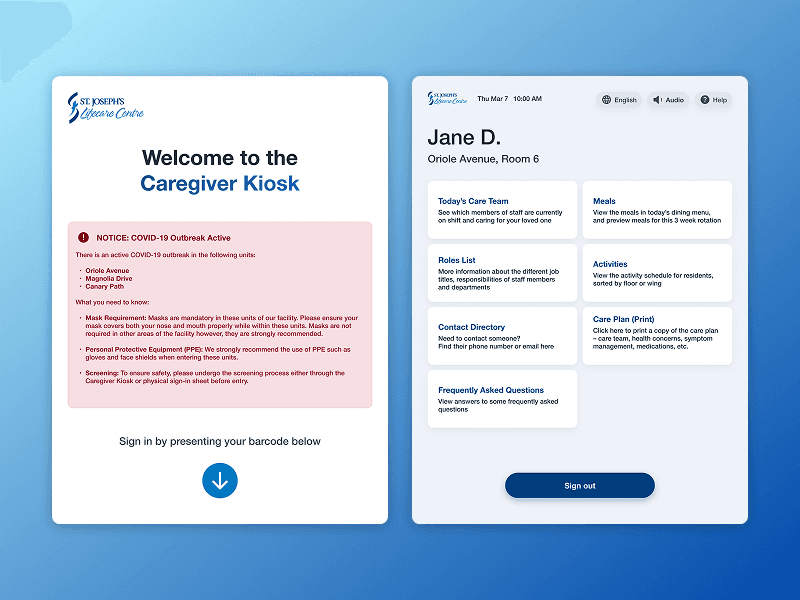
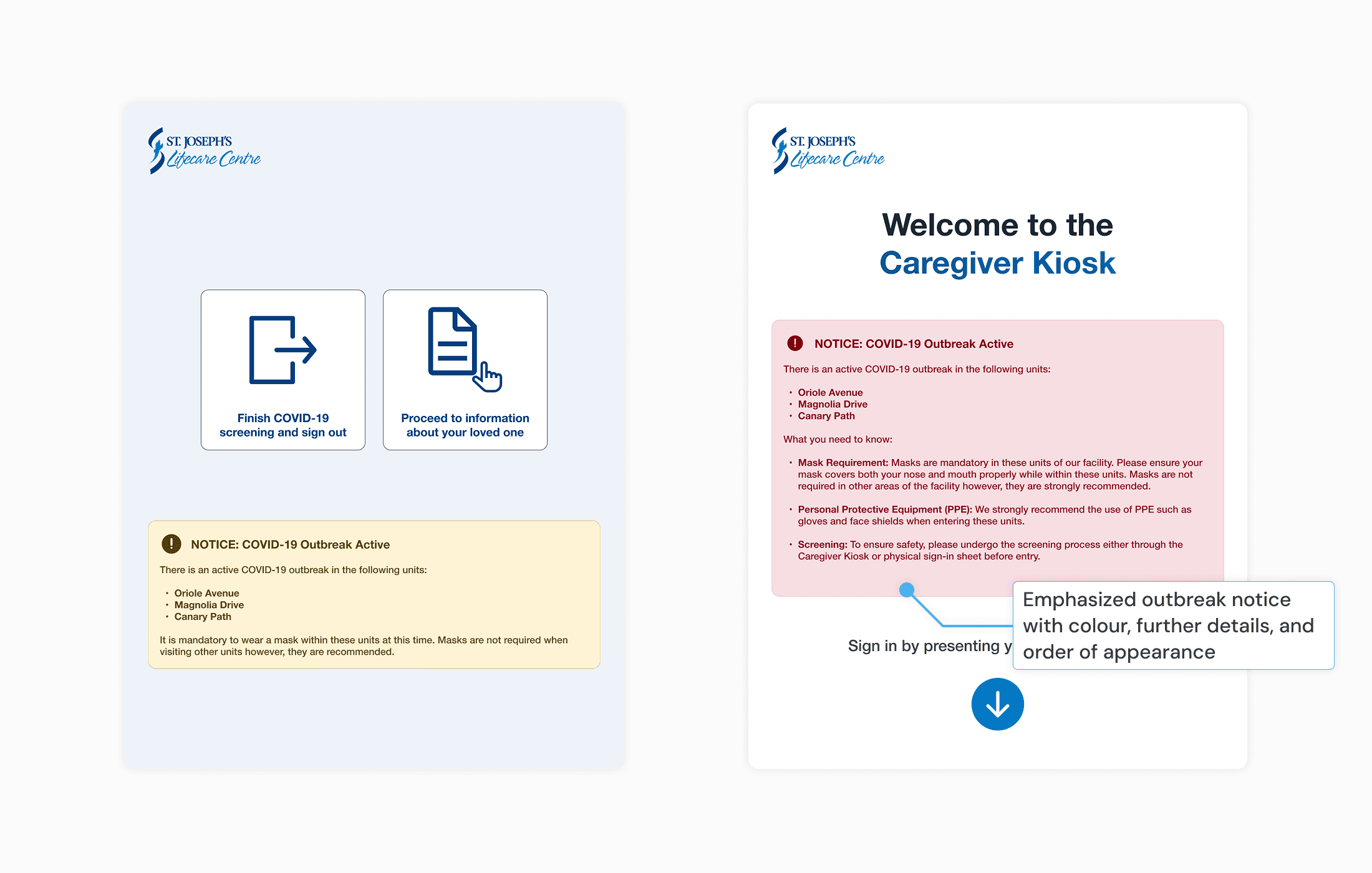
The active Covid-19 outbreak notice needed to be more pronounced
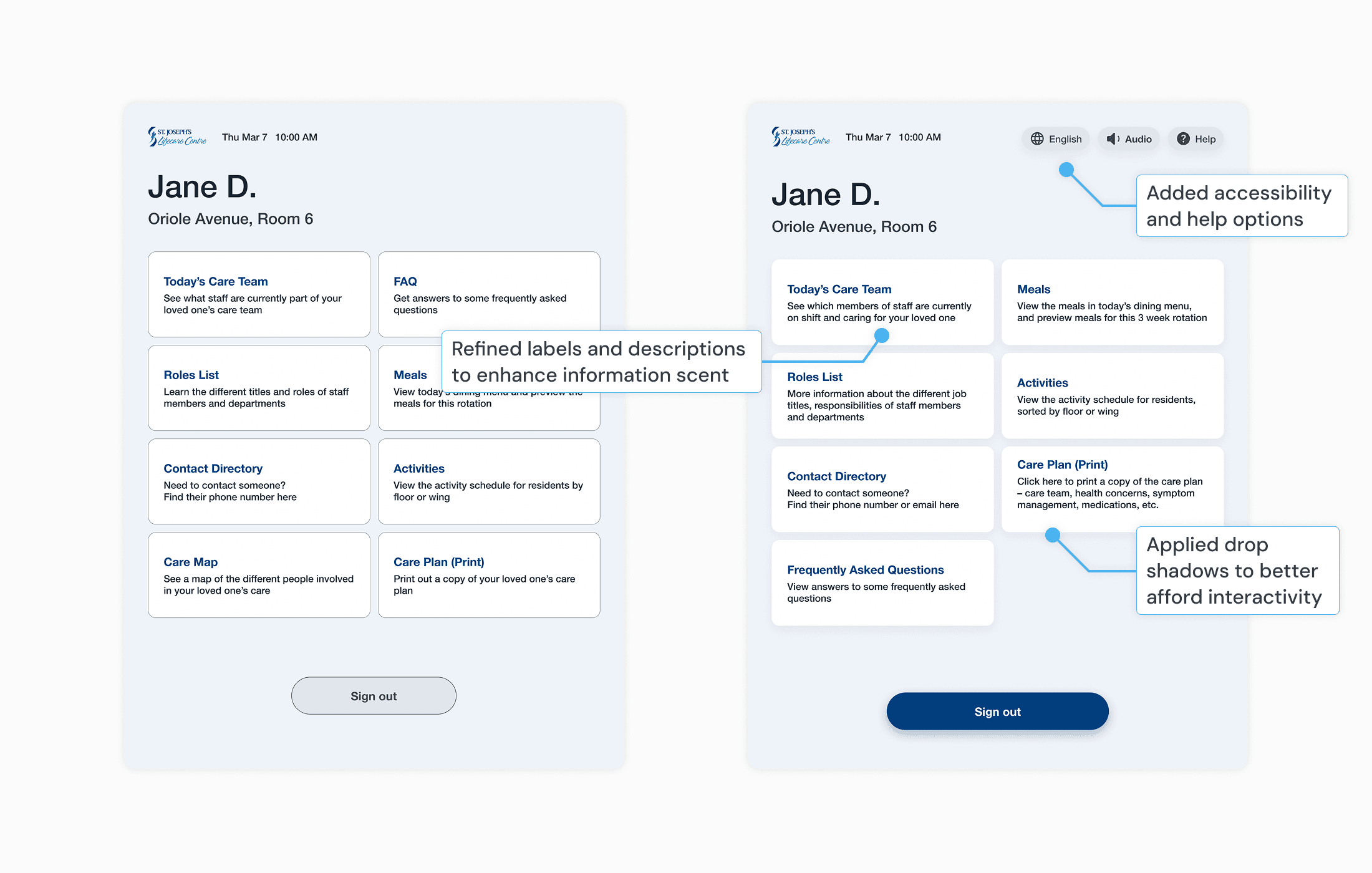
Additional language options and a "help" button were requested additional features
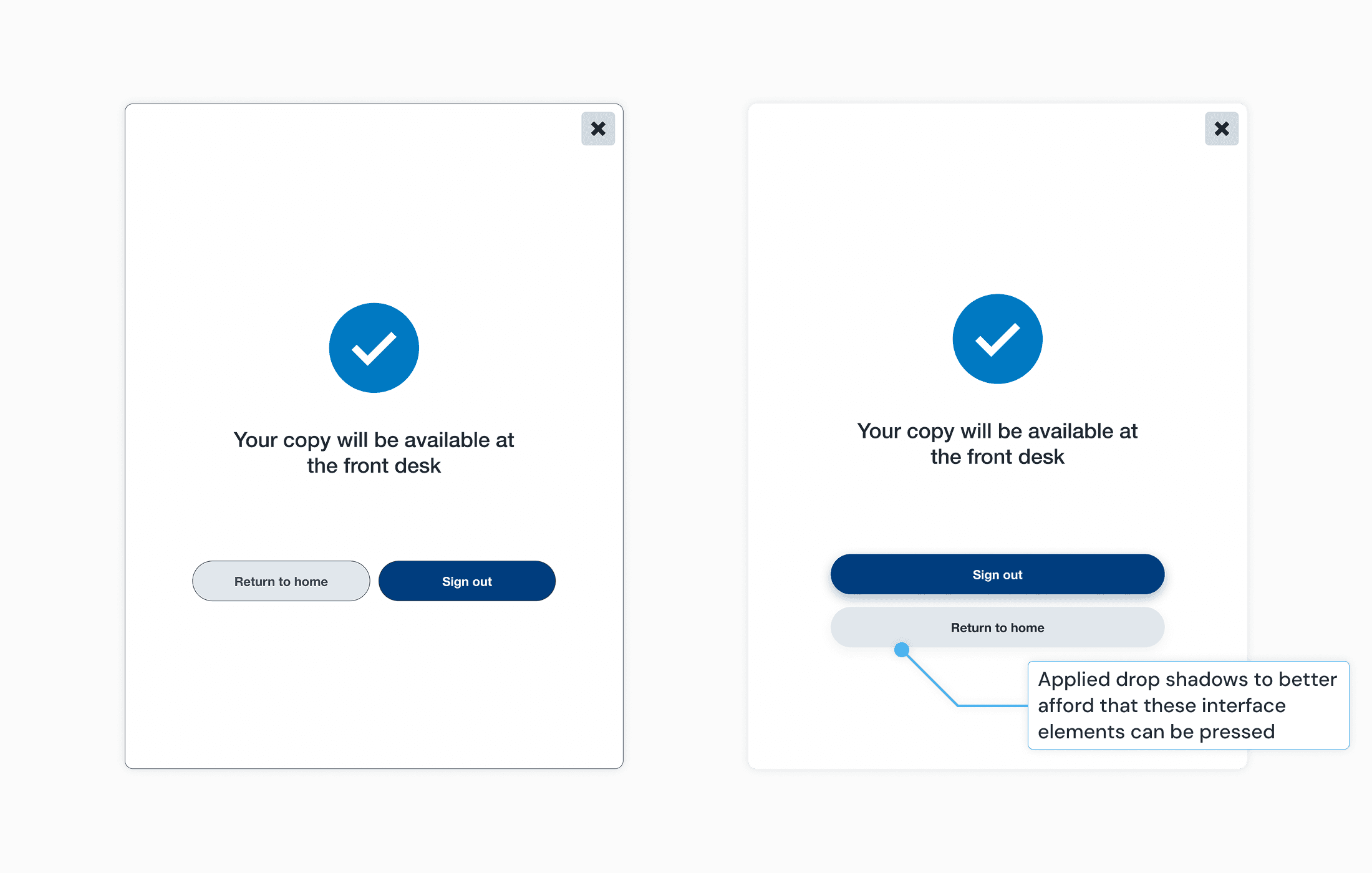
Participants had difficulty delineating certain content sections. They also had minor issues determining what interface elements were interactive
Information Architecture (Tree) Testing
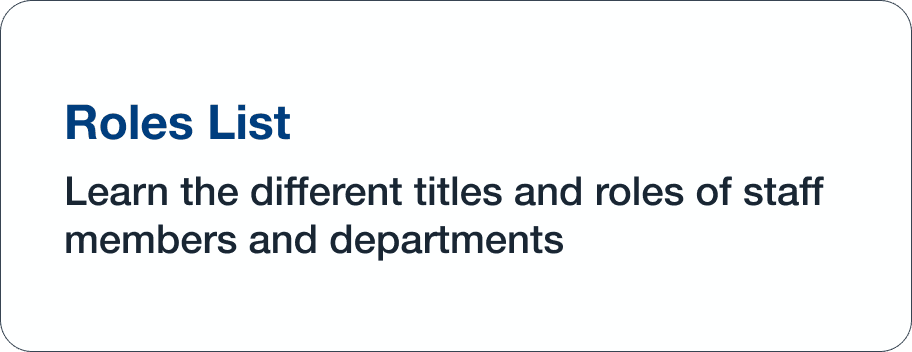
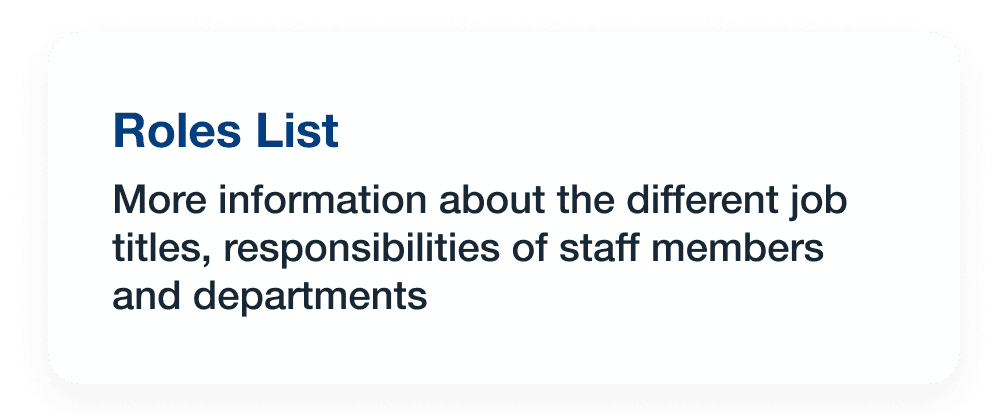
Tree testing informed that our homepage label descriptions could be improved
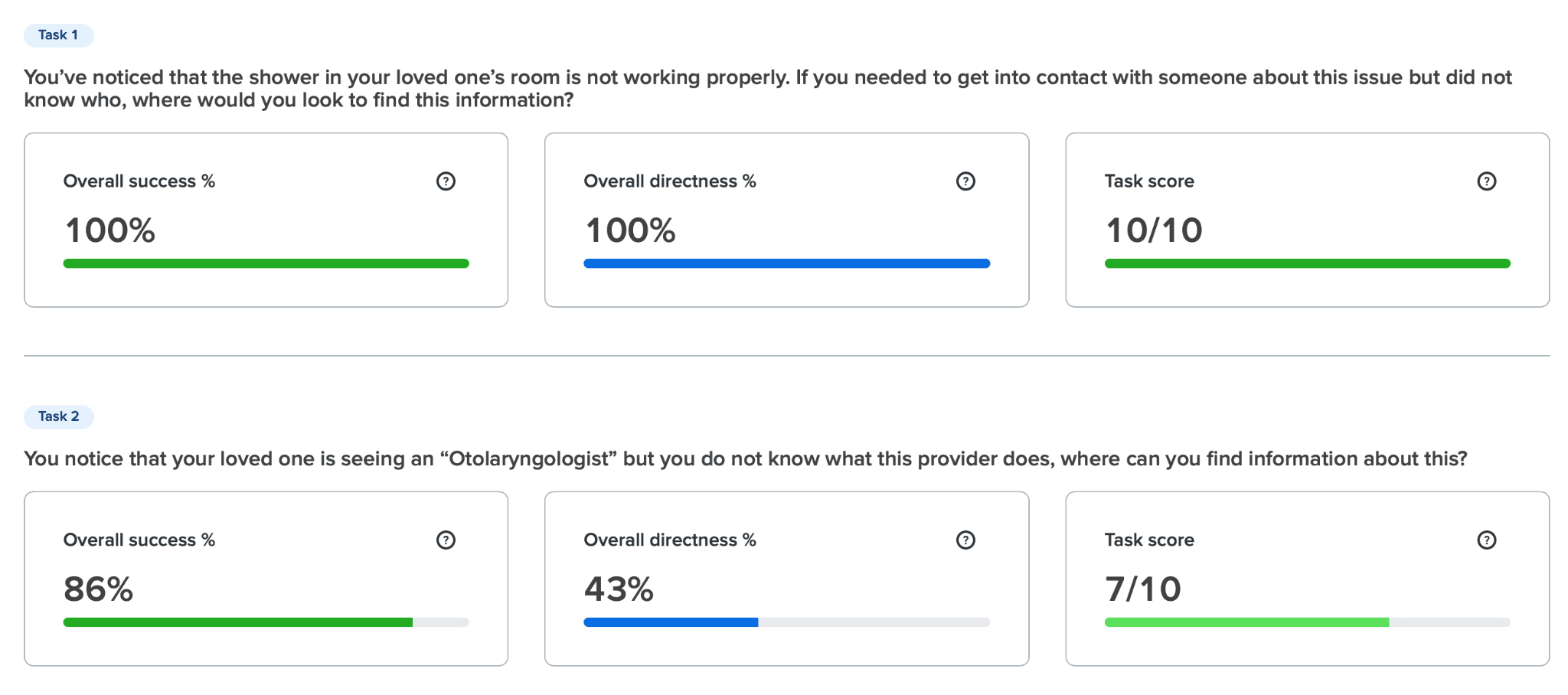
Given the information architecture issues uncovered during usability testing, we conducted tree testing (n=7) to further assess the navigational structure of the kiosk system.
We asked users to locate information housed under the Contact Directory and Roles List, as these areas had caused the most friction during usability testing. The results indicated that while our labels were generally clear, they were not as direct as they could be. As a result, we identified an opportunity to rework the homepage label descriptions to strengthen information scent and better support users’ information-seeking needs.
Iteration
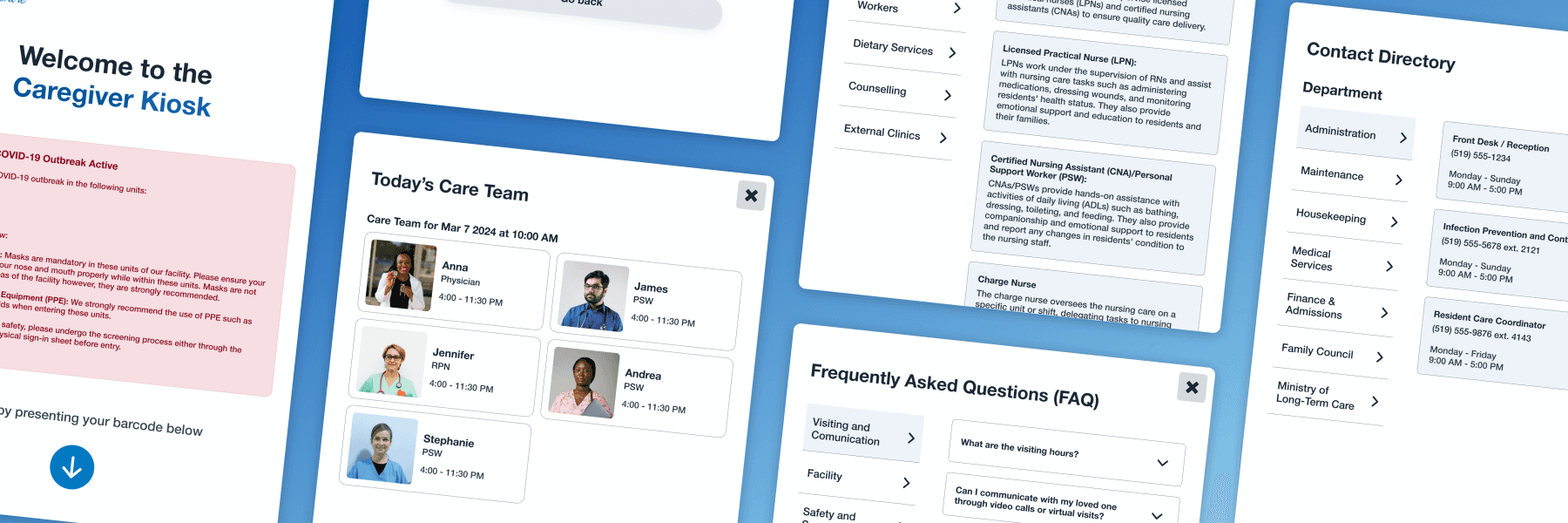
Our major improvements included refining colour psychology, improving button labels, adding accessibility features, and reinforcing information architecture
An interactive kiosk system designed to empower caregivers with on-demand access to key information about their loved one's care and St. Joseph's facility. The Caregiver Kiosk sets out to support caregivers in navigating the complexities of long-term care.
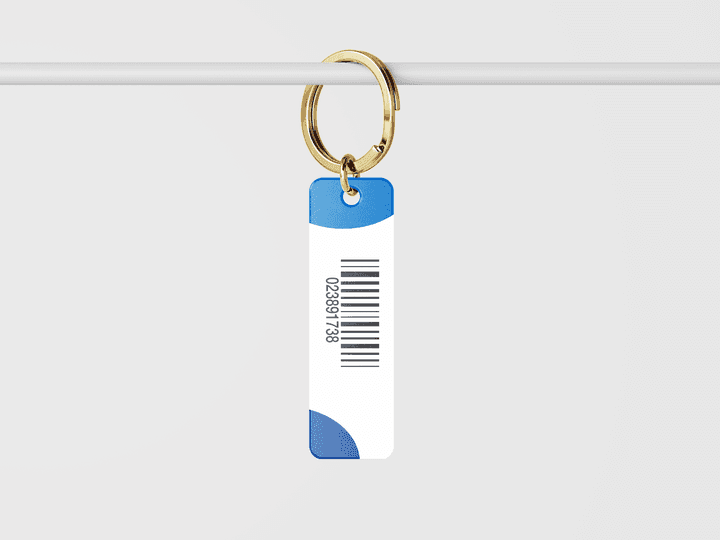
Get access to key information about your loved one's care with the scan of a key tag to sign-in
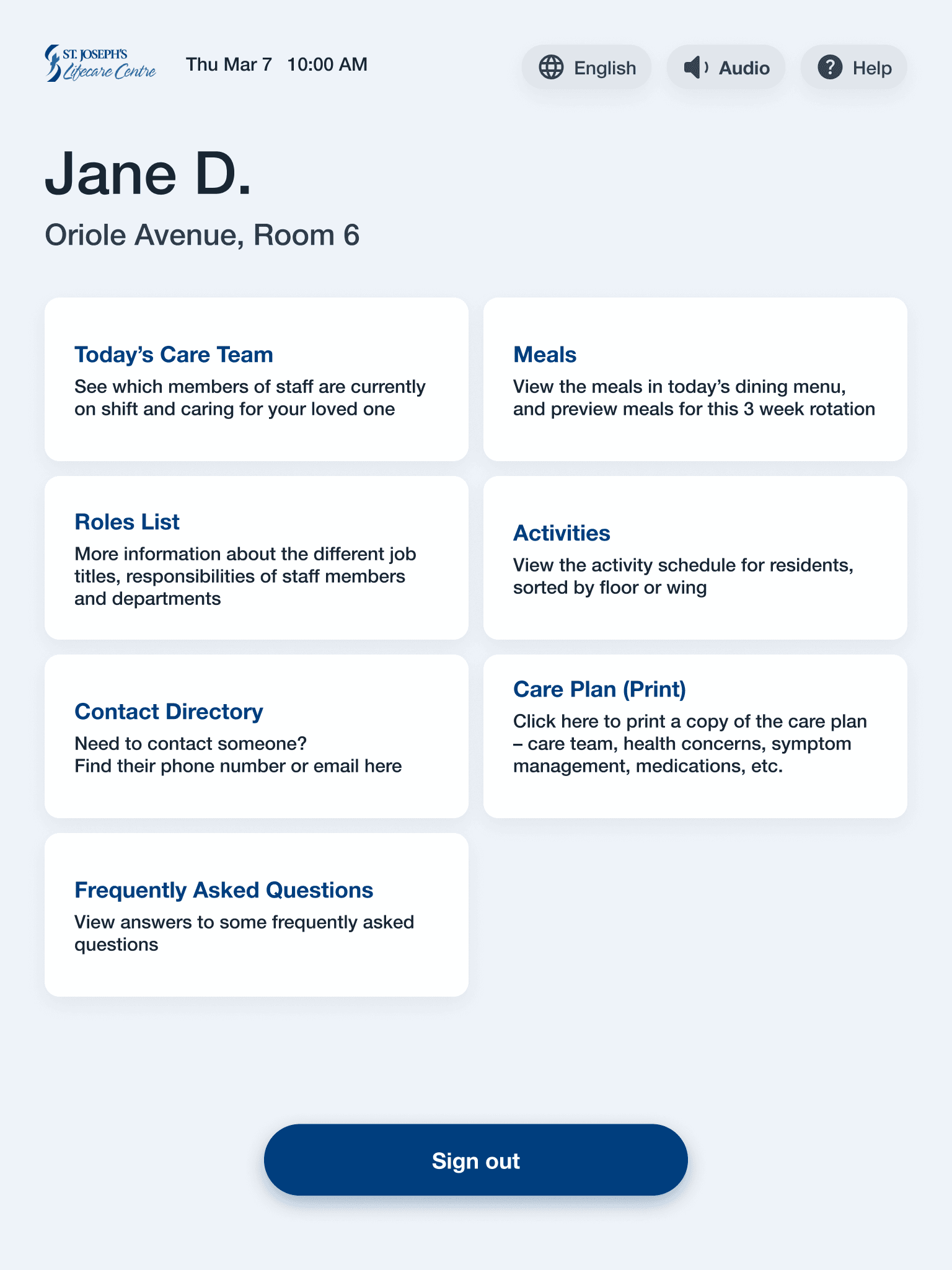

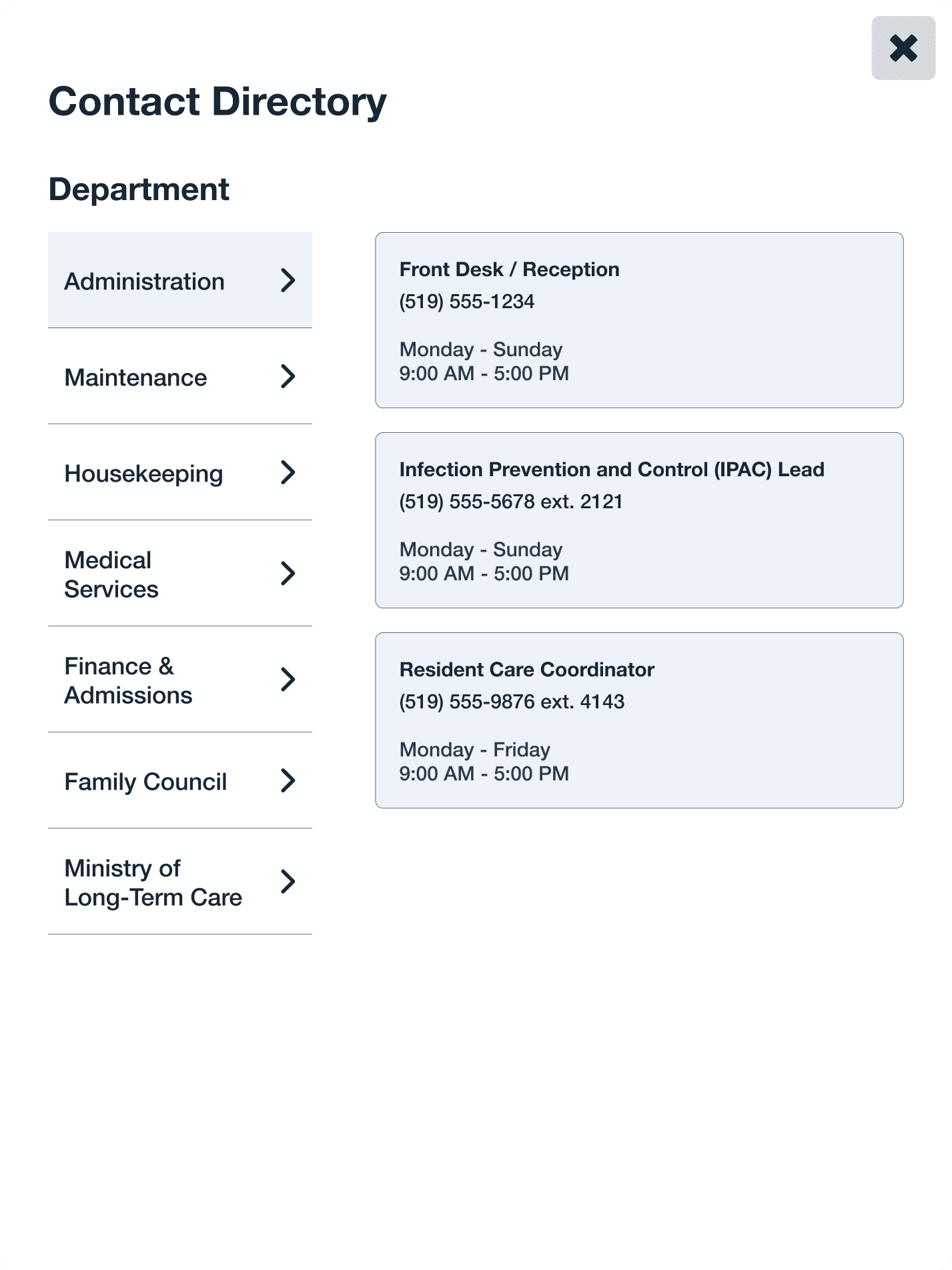
Have a concern or question? Find the exact person you need to get in touch with
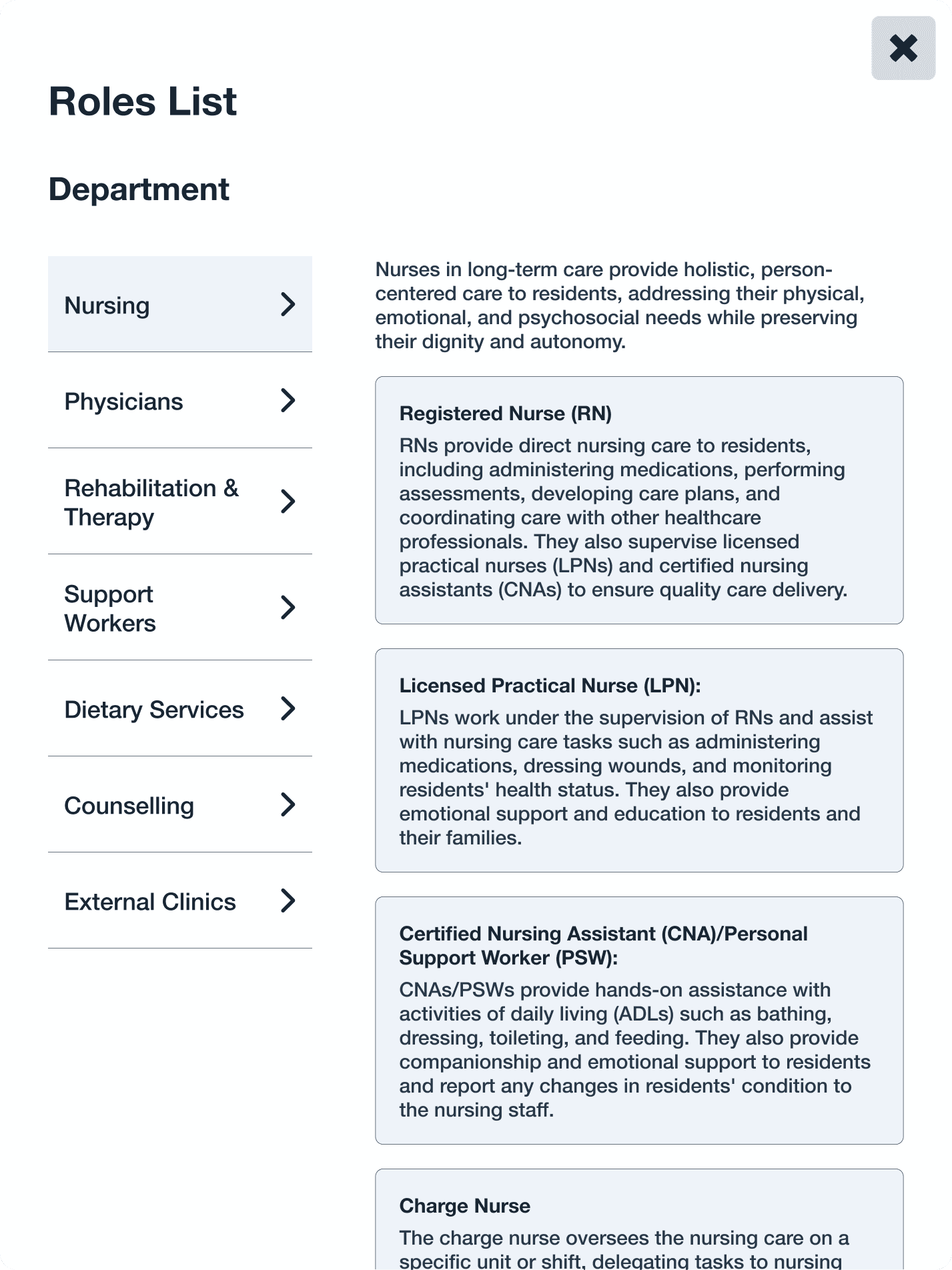
Figure out who does what in your loved one's care so you know where to address questions or concerns
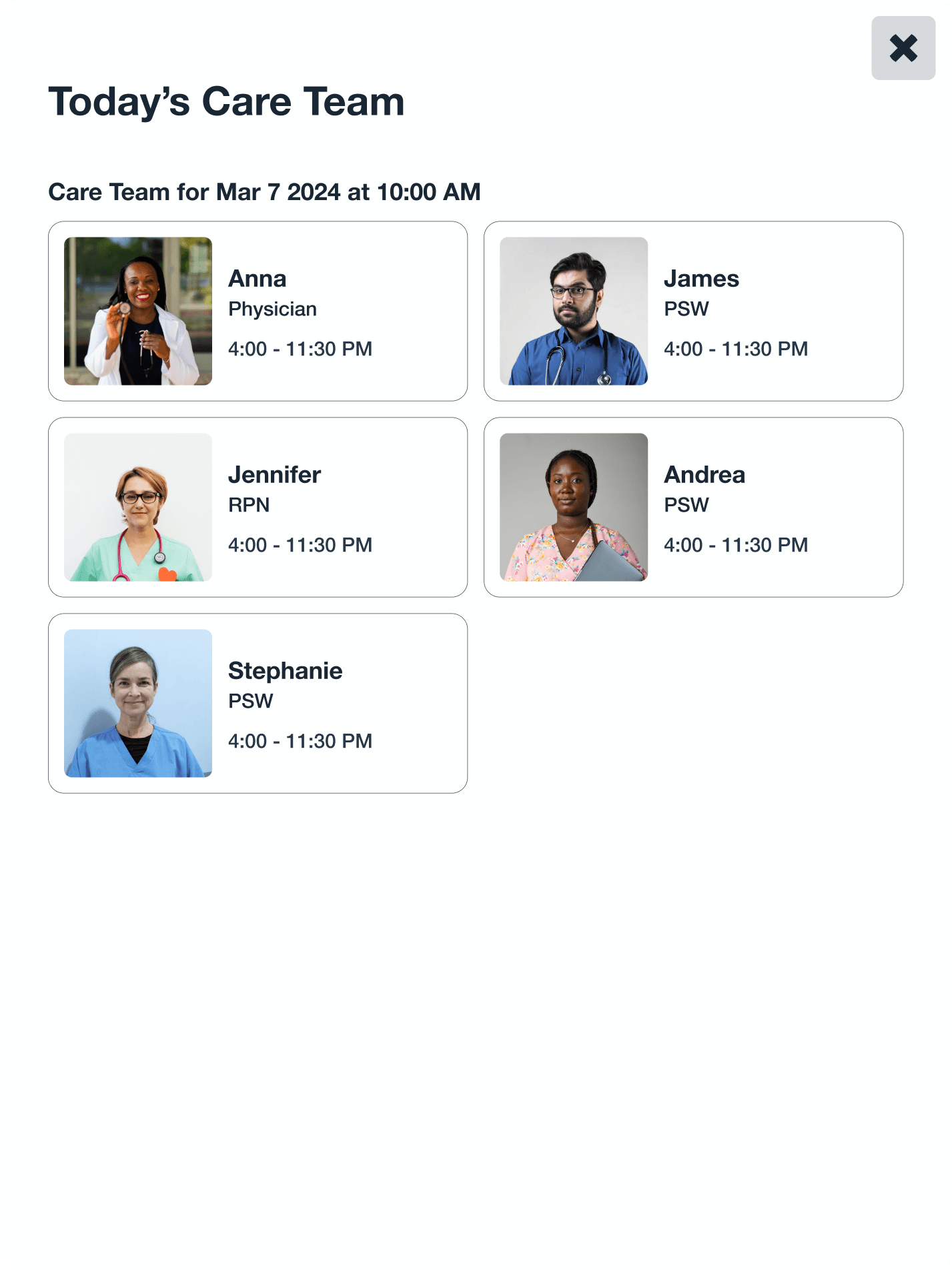
See what staff are working with your loved one today so you know who to get in touch with
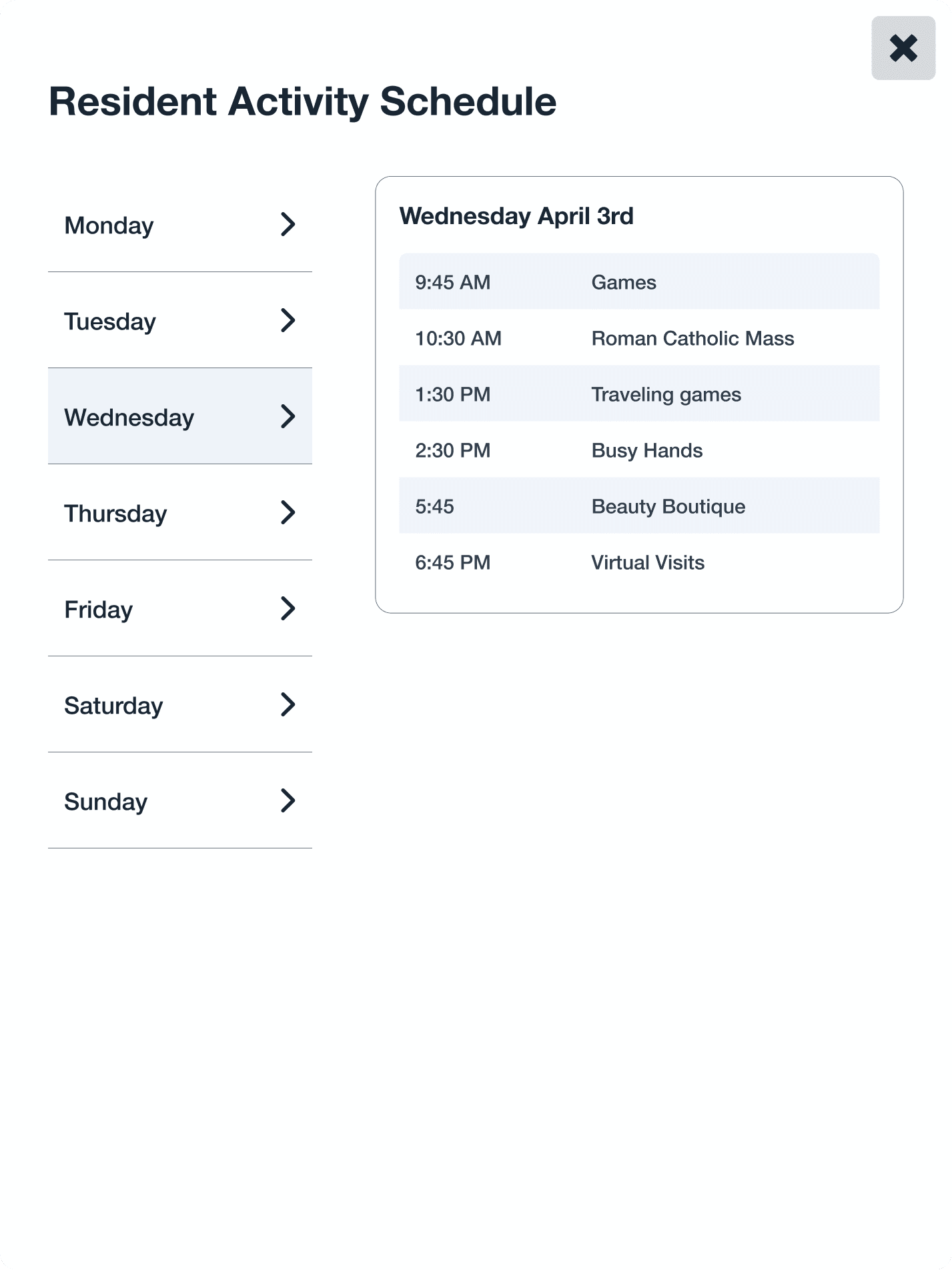
See what activities and meals are lined up in your loved one’s schedule
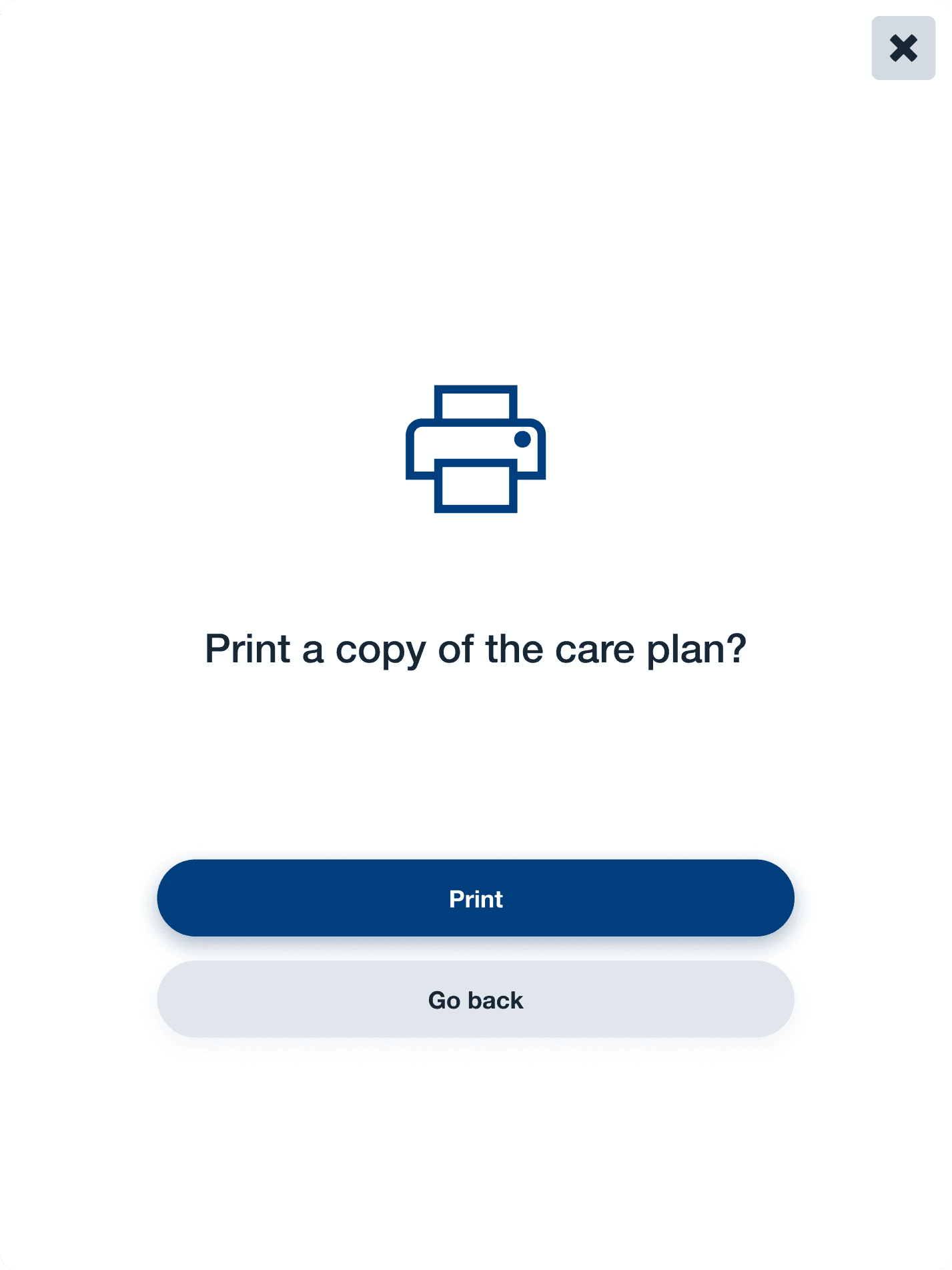
Keep track of your loved one's care plan by getting your own copy
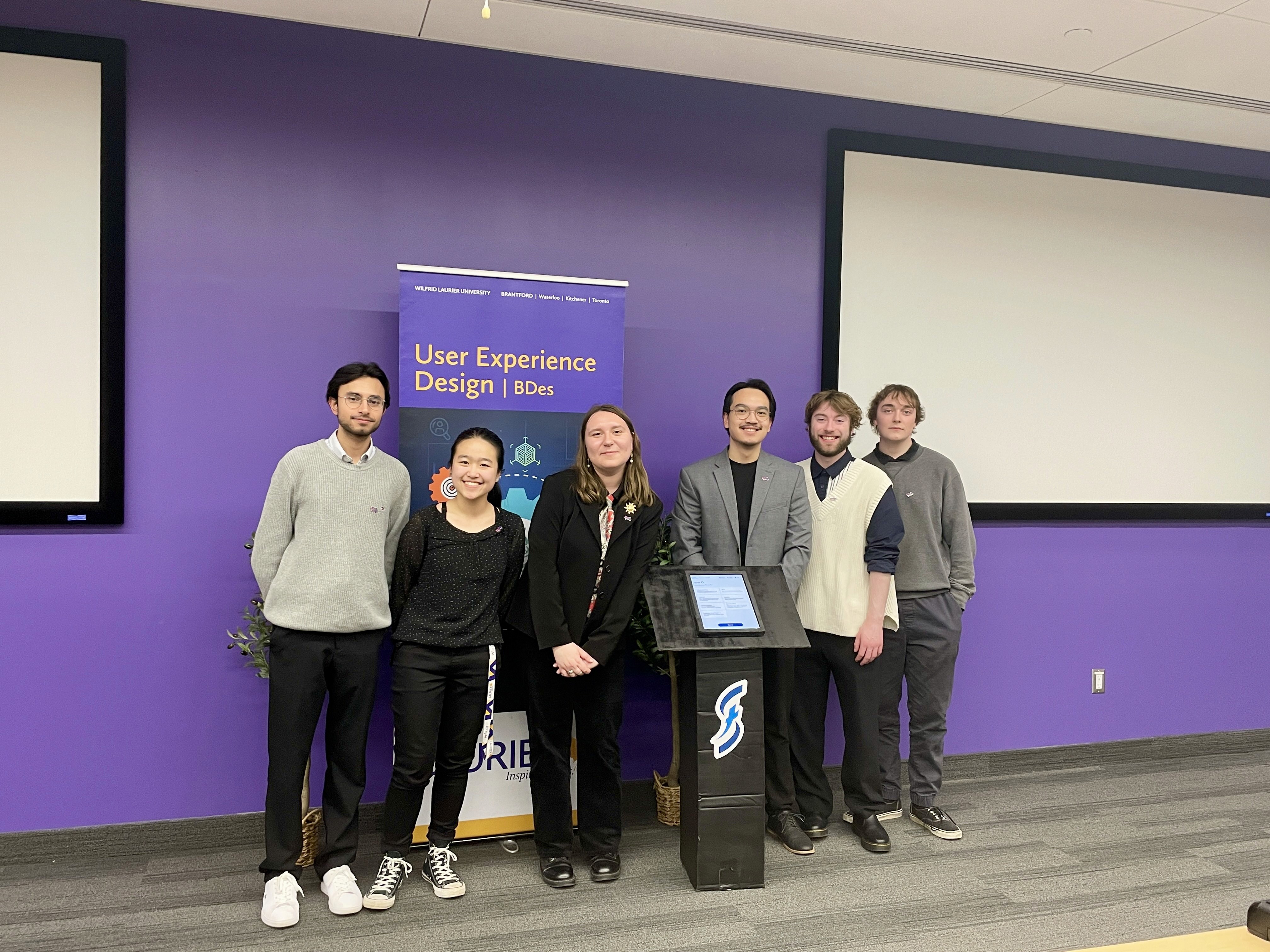
Learnings
Remember the “Less Obvious” Stakeholders
During the ideation phase, we brought several ideas to the client for discussion. These conversations ultimately taught us an important lesson about stakeholders, particularly those who are less obvious. While our initial concepts aimed to improve the caregiver experience, the client helped us recognize that they would also indirectly increase the workload of St. Joseph’s staff, making them counterproductive.
We had become so focused on caregivers that we failed to consider the organization as a whole. This experience reinforced for me that design solutions rarely exist in a vacuum. It is essential to consider the perspectives of everyone who may be impacted by the work, including those who are not immediately visible.