
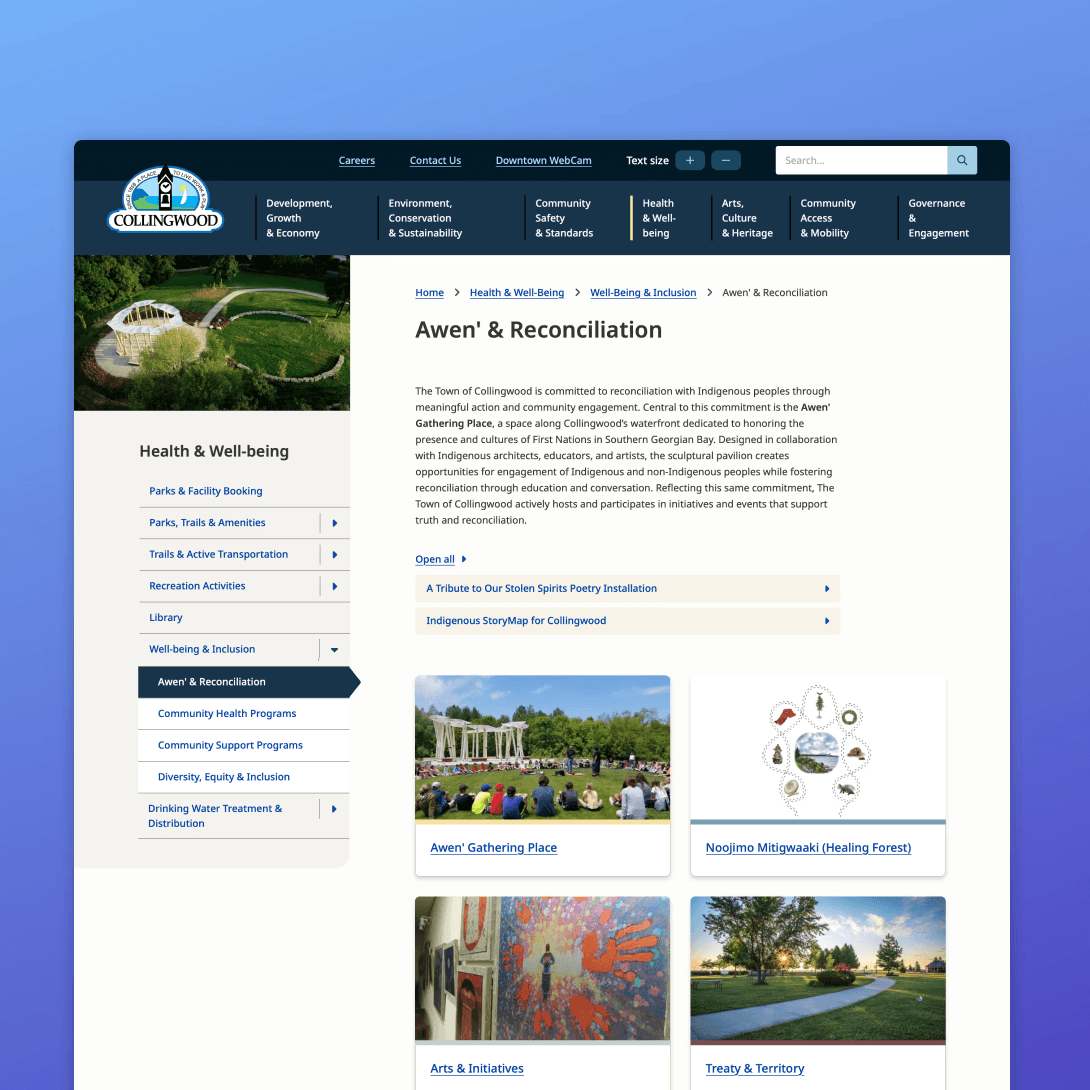
Awen' & Reconciliation:
The Town of Collingwood’s newly updated web section for Indigenous-related content
Background
Being tasked with updating Indigenous-related content, I realized the amount of content on a single page was a glaring information architecture problem
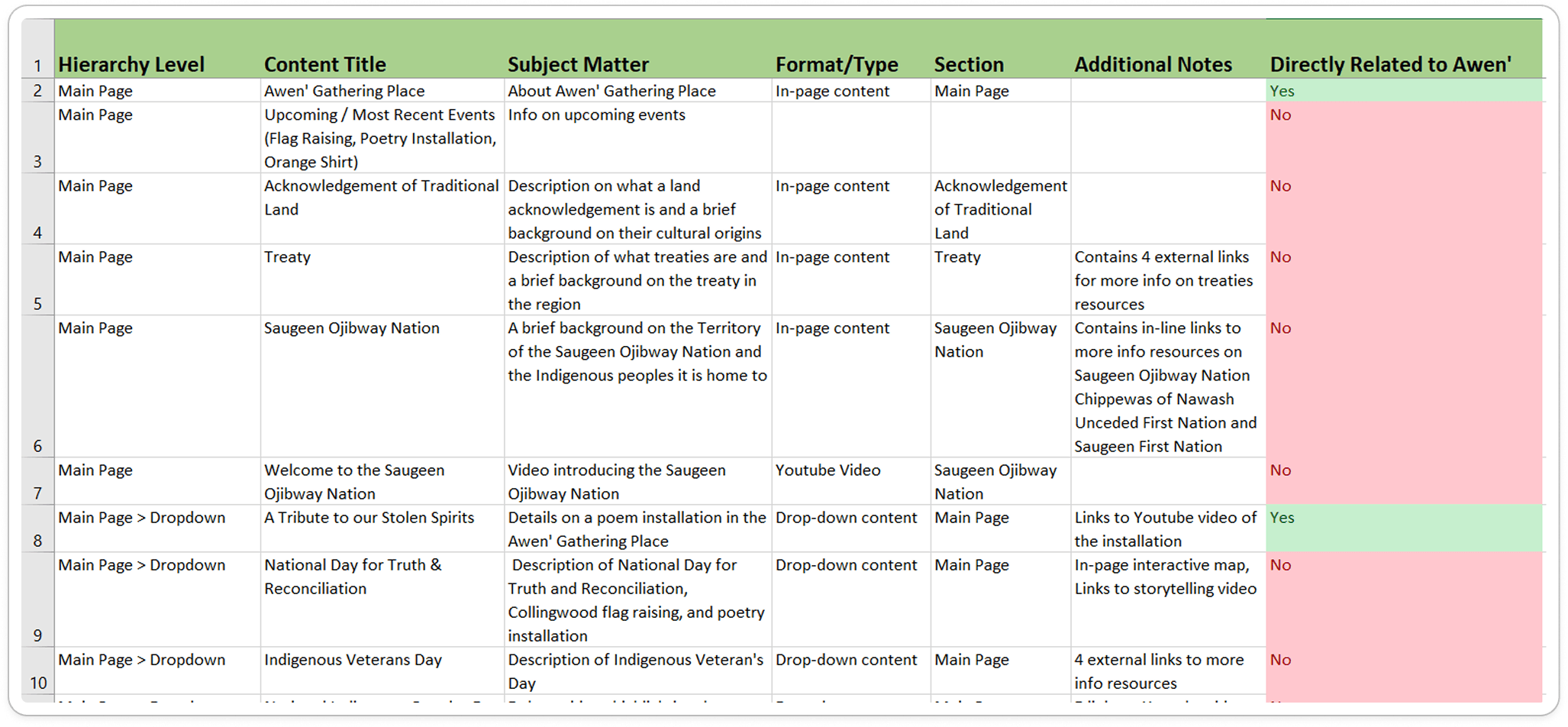
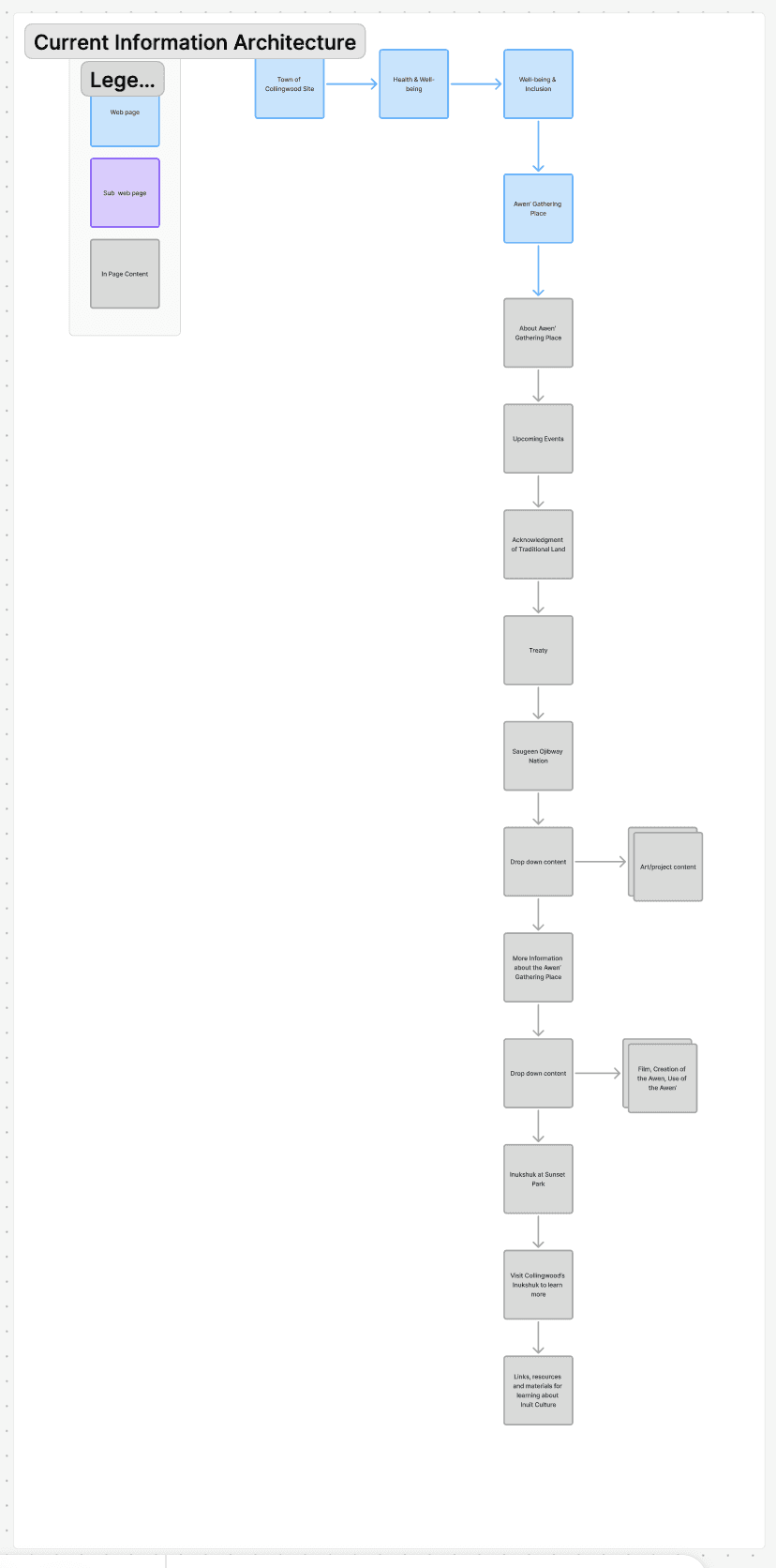
I was initially tasked with adding Indigenous-related content to the Town’s Awen’ Gathering Place page. In doing so, I uncovered a significant information architecture problem: what began as a page for a single public art installation had grown into an endlessly scrolling page containing all Indigenous-related content. With approval from my manager, I was tasked to explore how we might fix this issue.
Problem Area
It became clear that Indigenous content had overgrown its home on the website
After mapping and taking inventory of the content, it became apparent that the main page for Indigenous-related content was originally intended to highlight the Town’s Indigenous public art installation, Awen’ Gathering Place. Over time, however, it had expanded to include nearly all Indigenous-related content on the website. Housing all of this content on a single page proved problematic for five main reasons:

Iceberg Syndrome
A UX/IA issue where the content visible upon landing on a page does not represent the full breadth of content available further down. Like an iceberg, the portion above the surface fails to communicate how much exists underneath. This creates unclear expectations and can discourage users from scrolling and exploring further.

Misleading Navigation
The main page’s title, Awen’ Gathering Place, suggested that it would contain information about the physical space itself. In reality, the page served as a catch-all for Indigenous-related content, ranging from initiatives and events to past projects and learning resources.

Poor Content Discoverability
Building on iceberg syndrome, housing all Indigenous-related content on a single page significantly reduced its discoverability. With such a large volume of content, the likelihood of users reaching and engaging with items further down the page was low. What is the value of documenting and sharing these Indigenous stories, initiatives, and resources if users are unlikely to ever encounter them?

Not Optimized for SEO
Page and content titles did not accurately reflect the content beneath them, making this section of the site difficult to discover through search engines. Because heading tags did not align with representative keywords, relevant Indigenous content was less likely to surface in search results.

No Structure or Pattern for Future Growth
As the Town continues to undertake initiatives, projects, and events in support of reconciliation, it was anticipated that additional Indigenous-related content would continue to be created. With the existing page structure, new content would simply be added to the bottom of the page, perpetuating the same discoverability, scalability, and clarity issues over time.
Constraints
Working inside the Town of Collingwood’s existing Drupal design system, there was little I could change from a visual design standpoint
Because the Town of Collingwood’s website operates within a predefined Drupal design system, there was limited flexibility for visual changes. My contributions therefore focused on restructuring content and improving navigation, rather than altering visual design.
Results
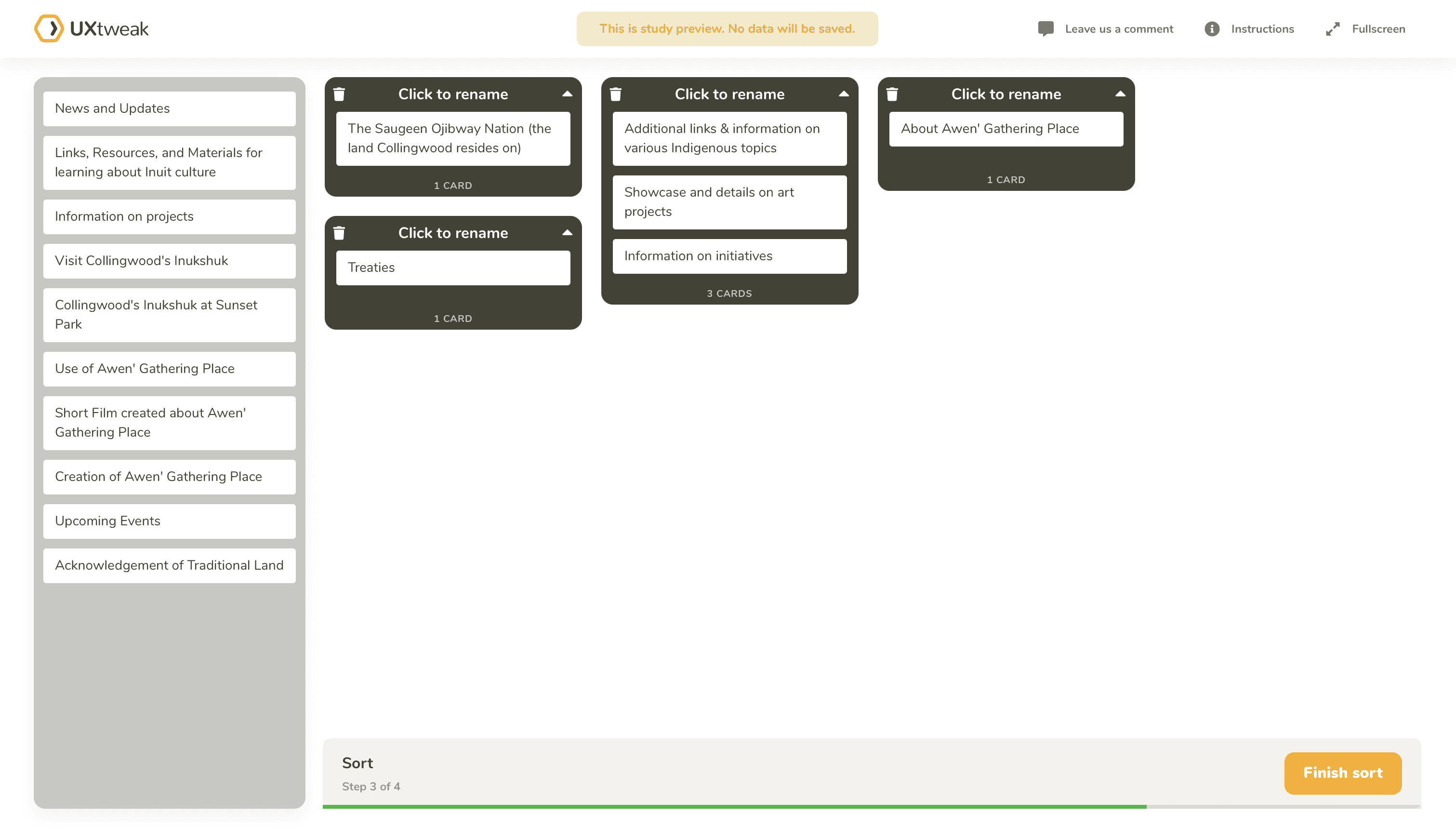
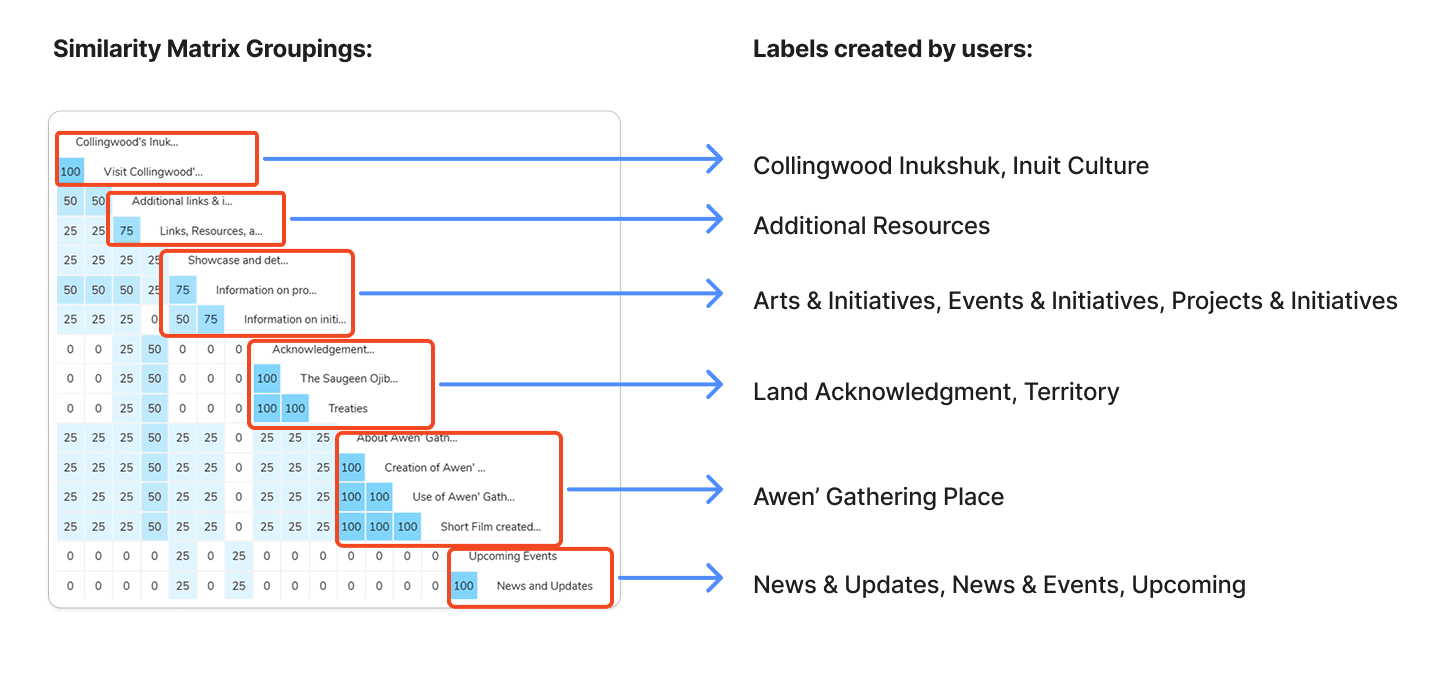
Analyzing a similarity matrix enabled me to see the most common groupings and labels that were used
Analyzing the card sort’s similarity matrix allowed me to identify the most common content groupings and the labels participants consistently used for them. These patterns directly informed how I structured and organized the subpages for this section of the website, moving away from a single, catch-all page toward a clearer, more discoverable structure.
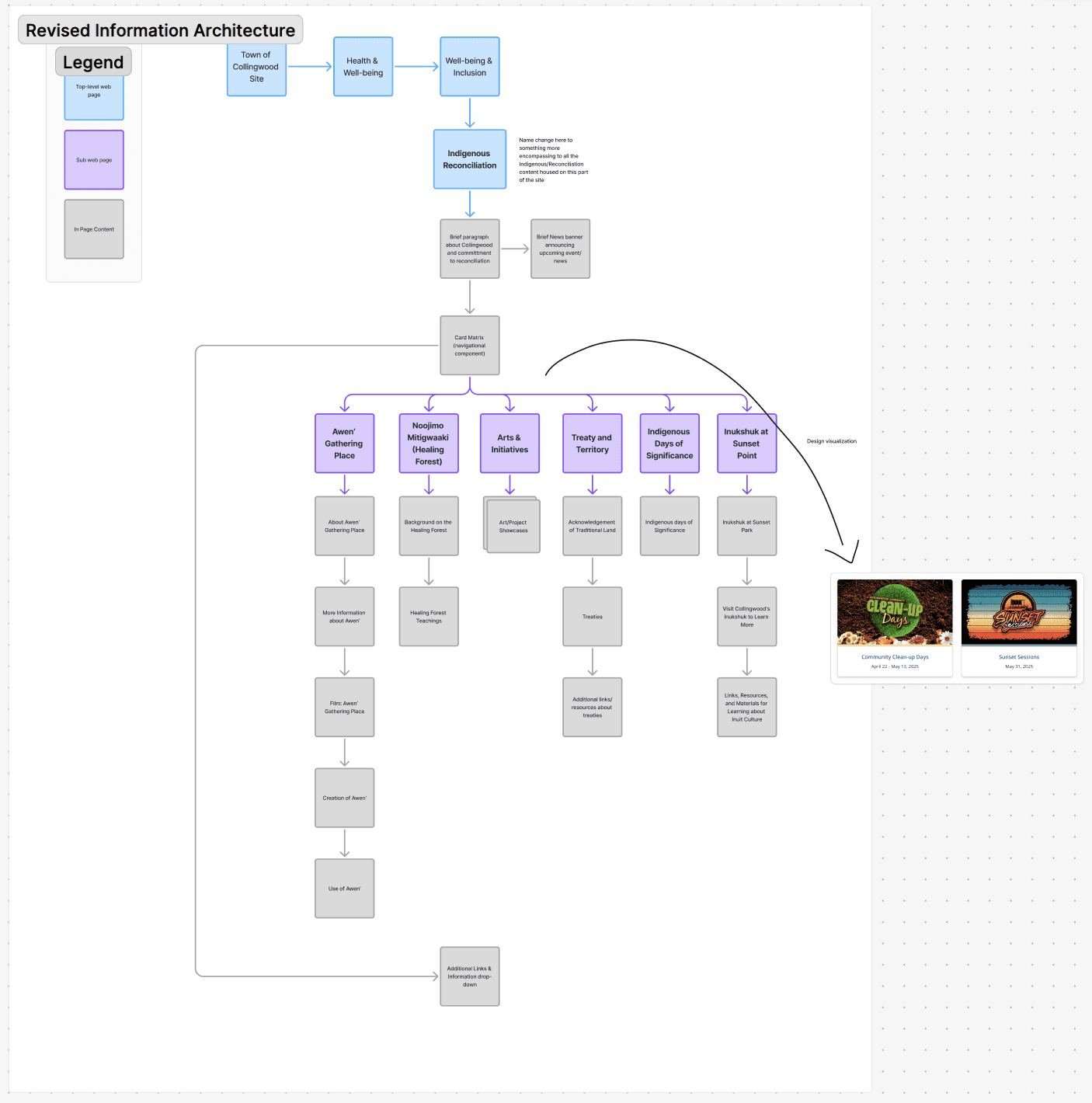
Awen' & Reconciliation
(Landing Point)
Introduction to this part of the website
Navigation access to other Indigenous content
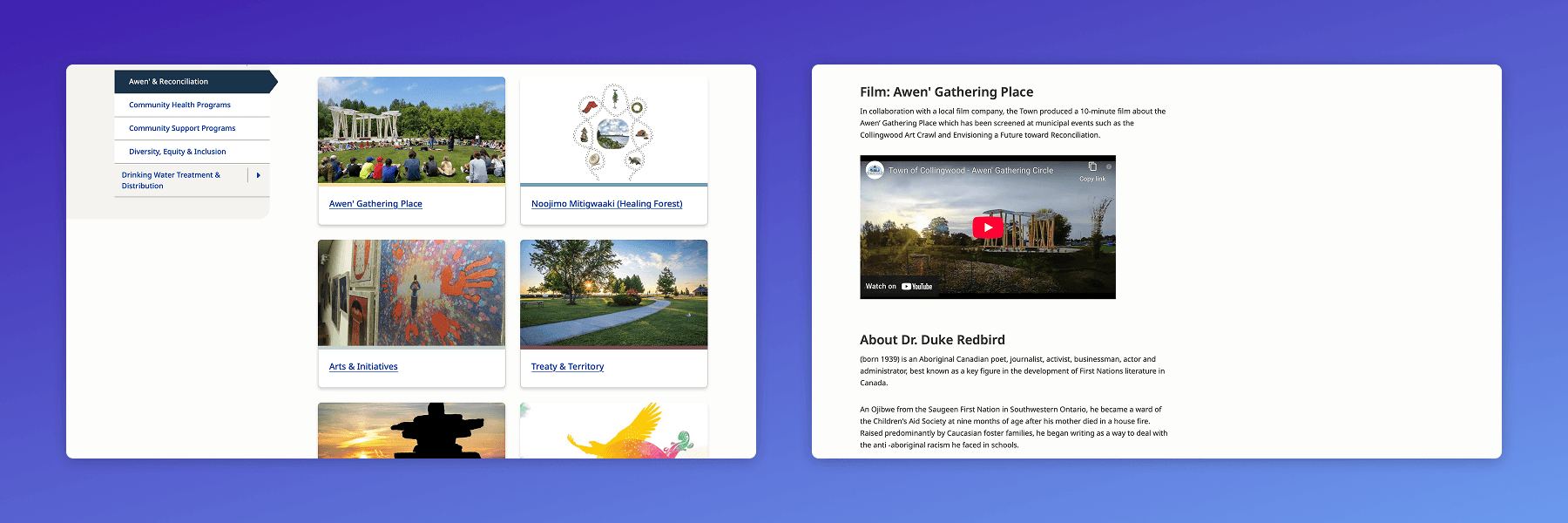
Awen' Gathering Place
Information on the Awen' Gathering Place installation
A background on the project and its building process
Noojimo Mitiigwaki - Healing Forest
Information of the Healing Forest itself
A background on the project and its building process
Healing Forest educational resources
Treaty & Territory
Acknowledgement of Traditional Land
Background on the Lake Simcoe-Nottawasaga Treaty
Treaty educational resources
Arts & Initiatives
Ongoing and past Indigenous art projects and initiatives
Indigenous Days of Significance
Information on Indigenous days of significance and related initiatives happening
Past initiatives and educational resource
Inukshuk at Sunset Park
Information on the Inukshuk at Sunset Park
Inuit culture educational resources
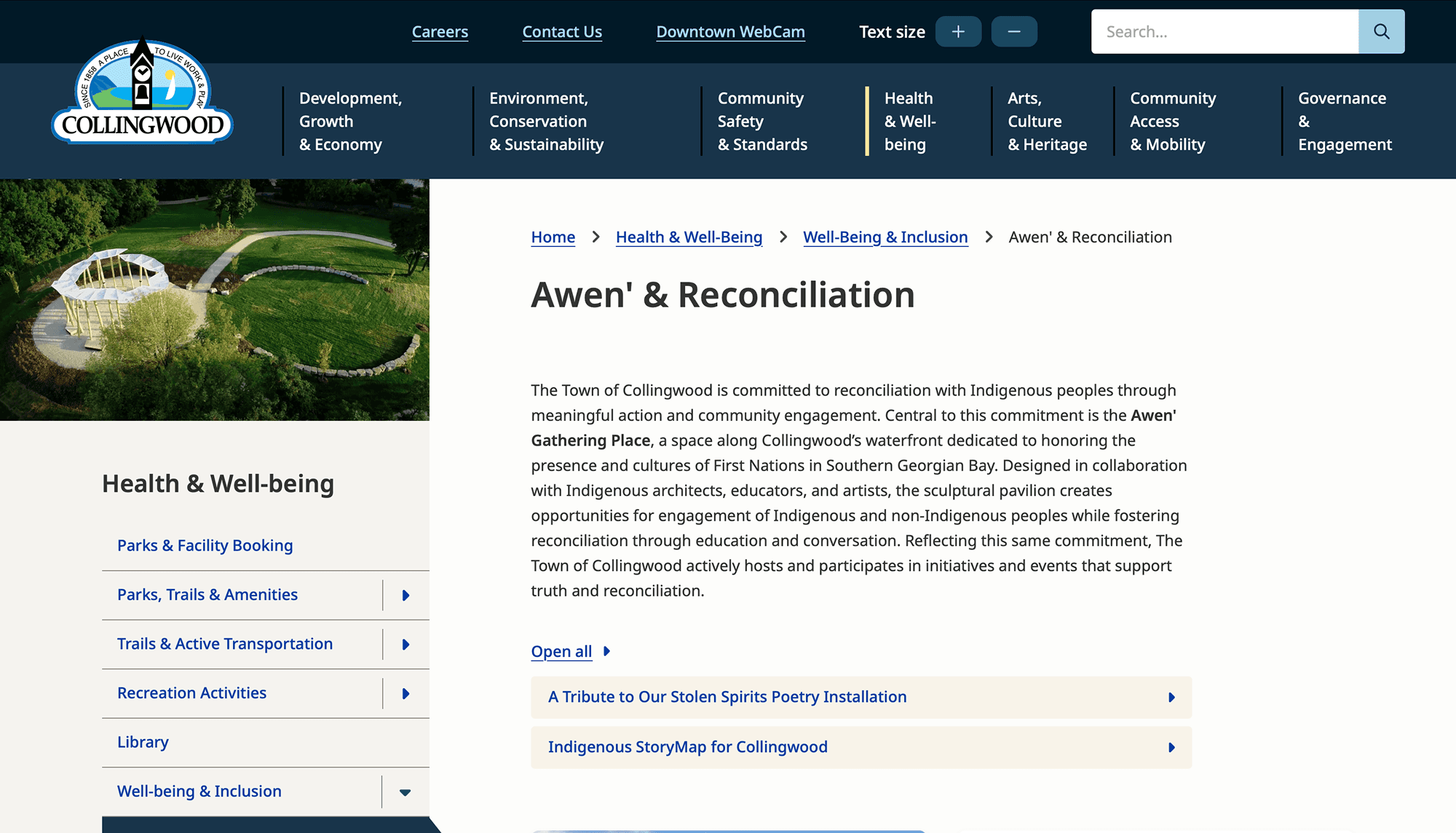
Awen' & Reconciliation
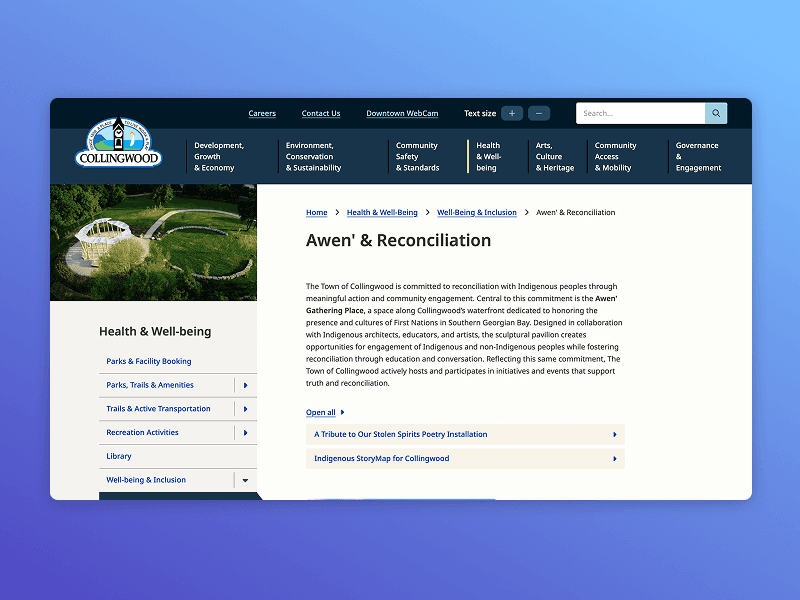
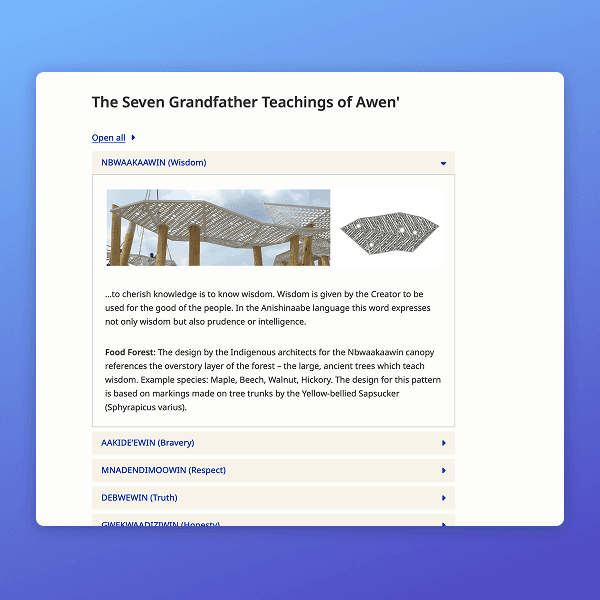
The Town of Collingwood’s new web section for all things Indigenous-related, where visitors can learn about Awen’ Gathering Place, the Healing Forest, and initiatives supporting truth and reconciliation, along with additional resources for learning more about Indigenous culture.
Learn more about the Town of Collingwood’s commitment to truth and reconciliation
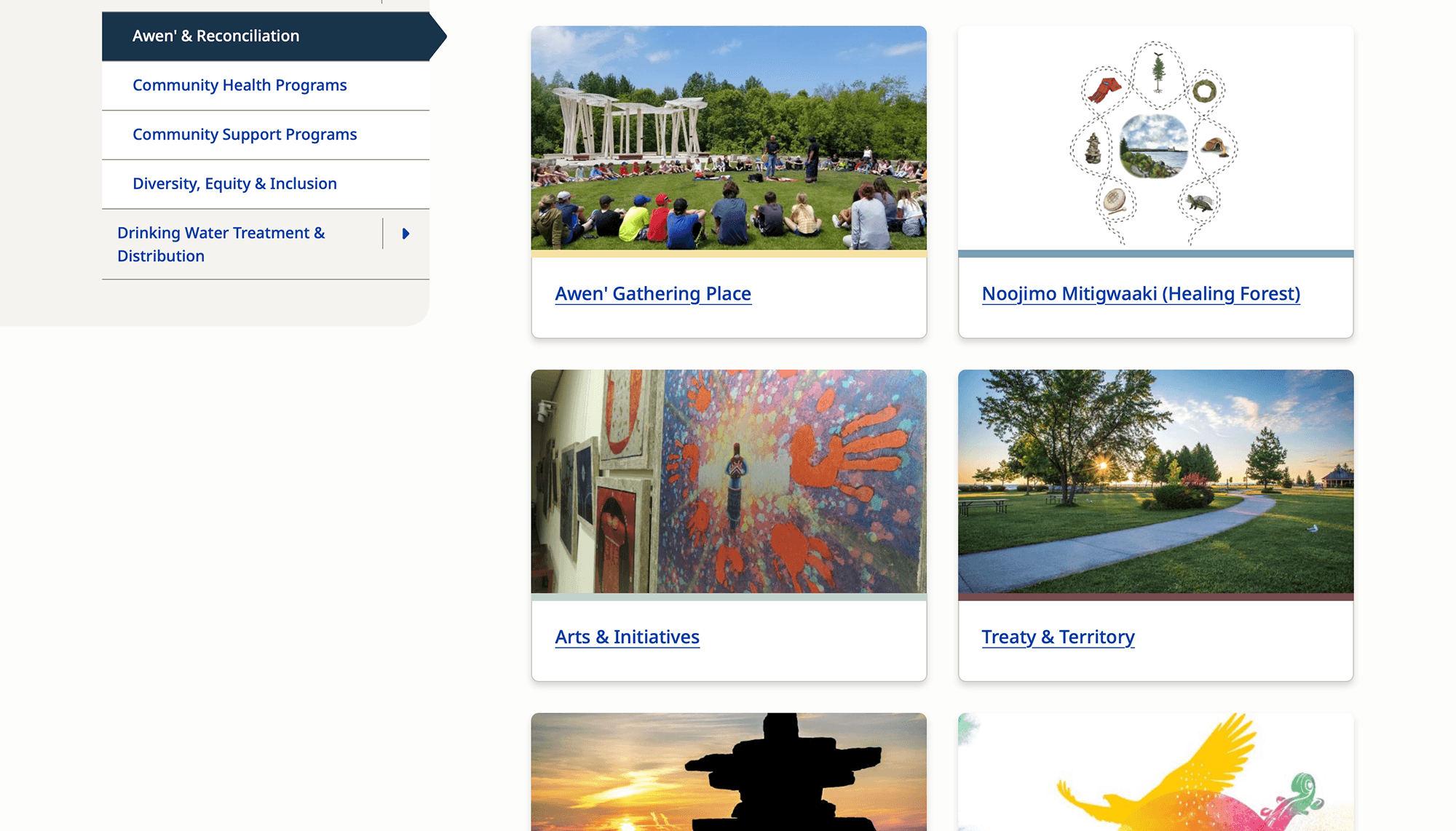
Easily navigate a growing collection of Indigenous-related content with a user-centered information architecture
Explore upcoming and past Indigenous initiatives and community efforts
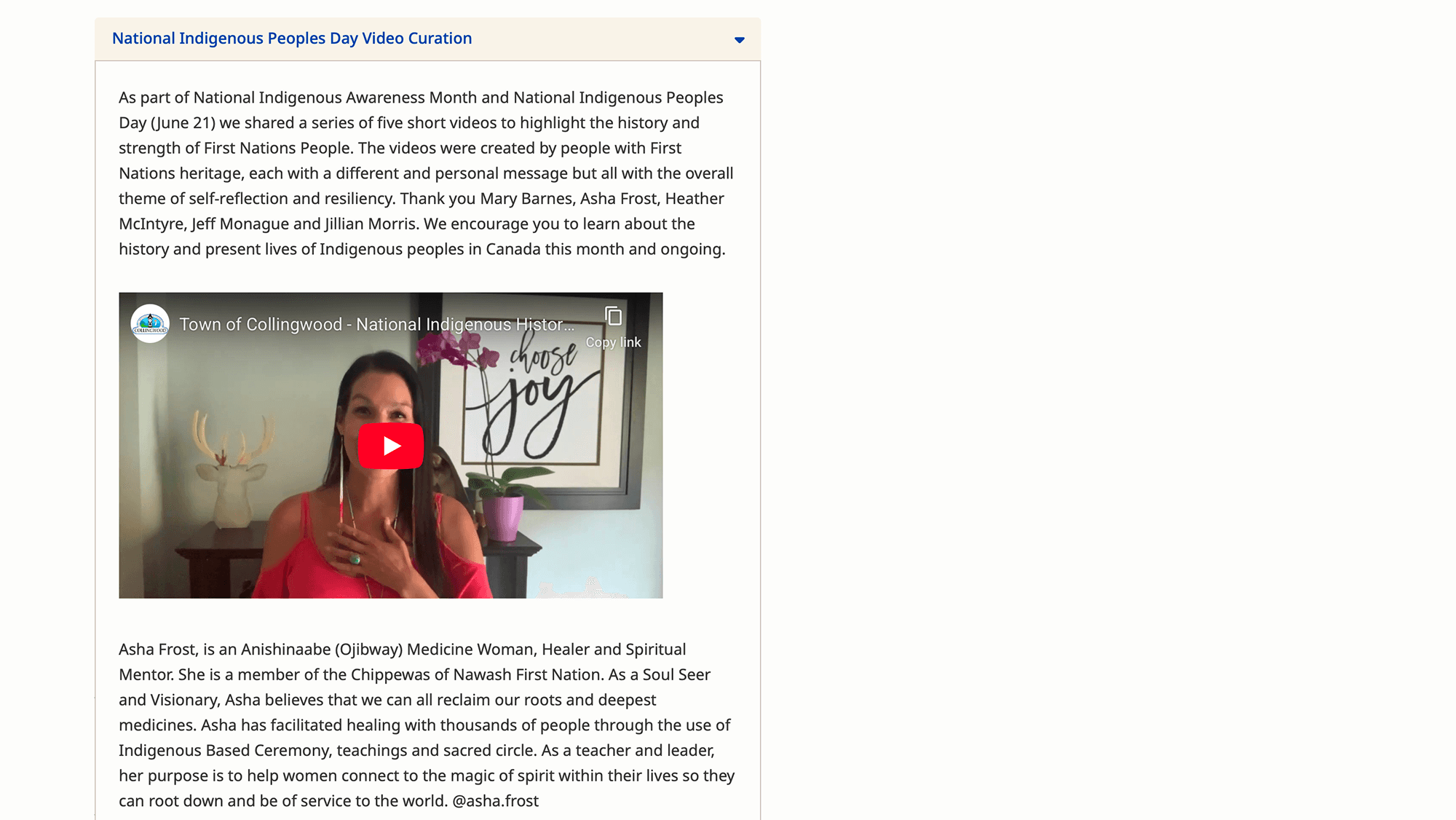
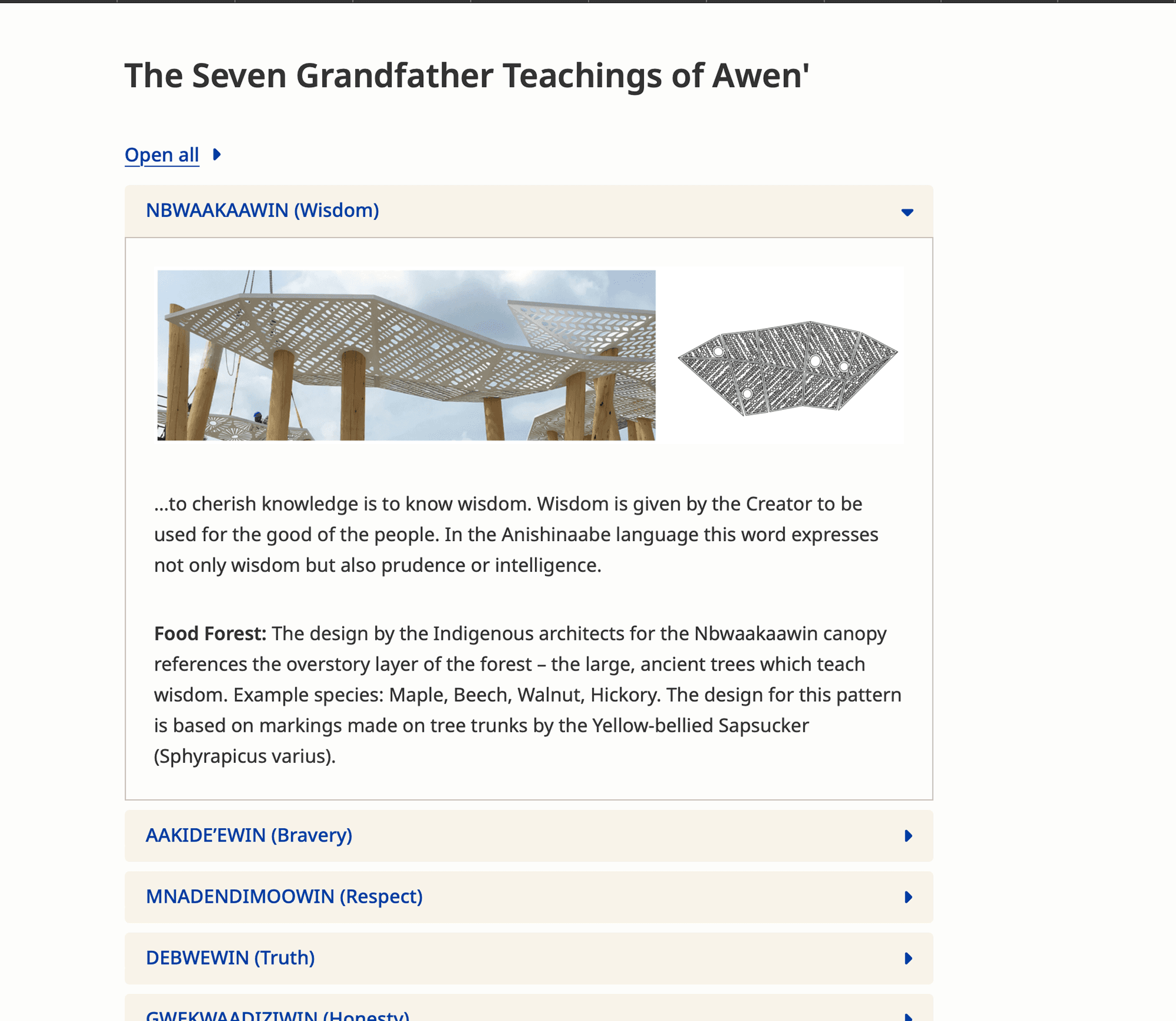
Learn more about local Indigenous culture, history, and ways to engage and learn
Impact
A brand new information architecture, supporting discoverability and growth of content
By the end of this project, I implemented a new information architecture that supports discoverability, exploration, and future content growth for the Town of Collingwood. Knowing the content would continue to grow, I focused on creating a structure that could be easily maintained and scaled beyond my time working with the Town.
Learnings
“Assume the content you have today is a small fraction of the content you will have tomorrow.”
Throughout this project, I frequently returned to this idea from Dan Brown's Eight Principles of Information Architecture. As a contract employee, longevity and legacy were key considerations in my approach. I wanted to ensure the information architecture I designed not only made sense in the present, but would continue to be useful as content grows, changes, and evolves over time.
UX is only effective if others understand it. Clearly communicating the reasoning behind design decisions was just as important as the design work itself.
Because my manager was unfamiliar with information architecture, I quickly realized that explaining why I was making certain decisions was essential. This became a key takeaway for me: not all stakeholders will have a deep understanding of UX, and earning their buy-in through clear communication is critical to doing work that ultimately benefits users.